INTERVIEW
Aleksandra Krasnopolska, Ceramic Sculptor
🌍︎ Gran Canaria, Spain
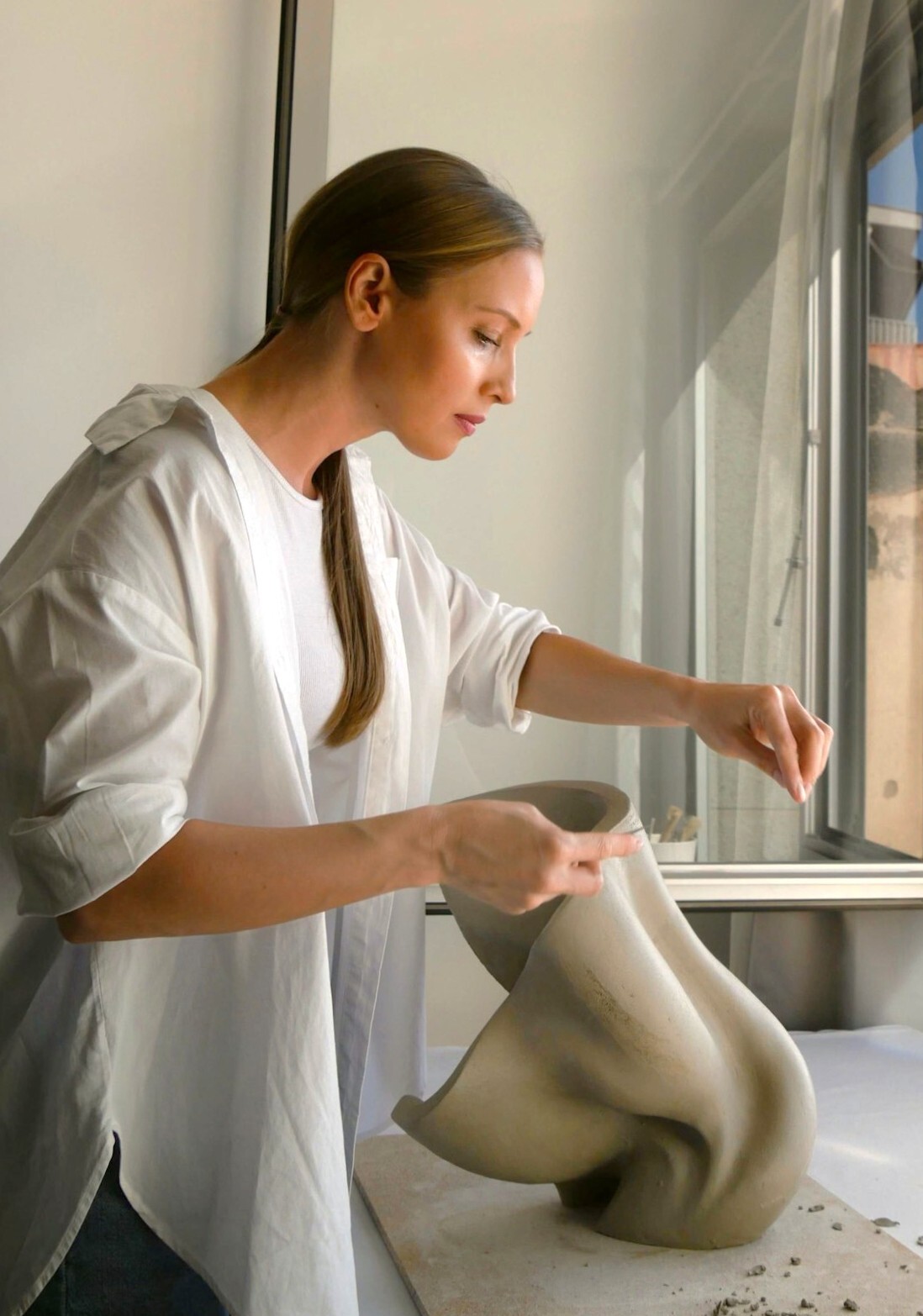
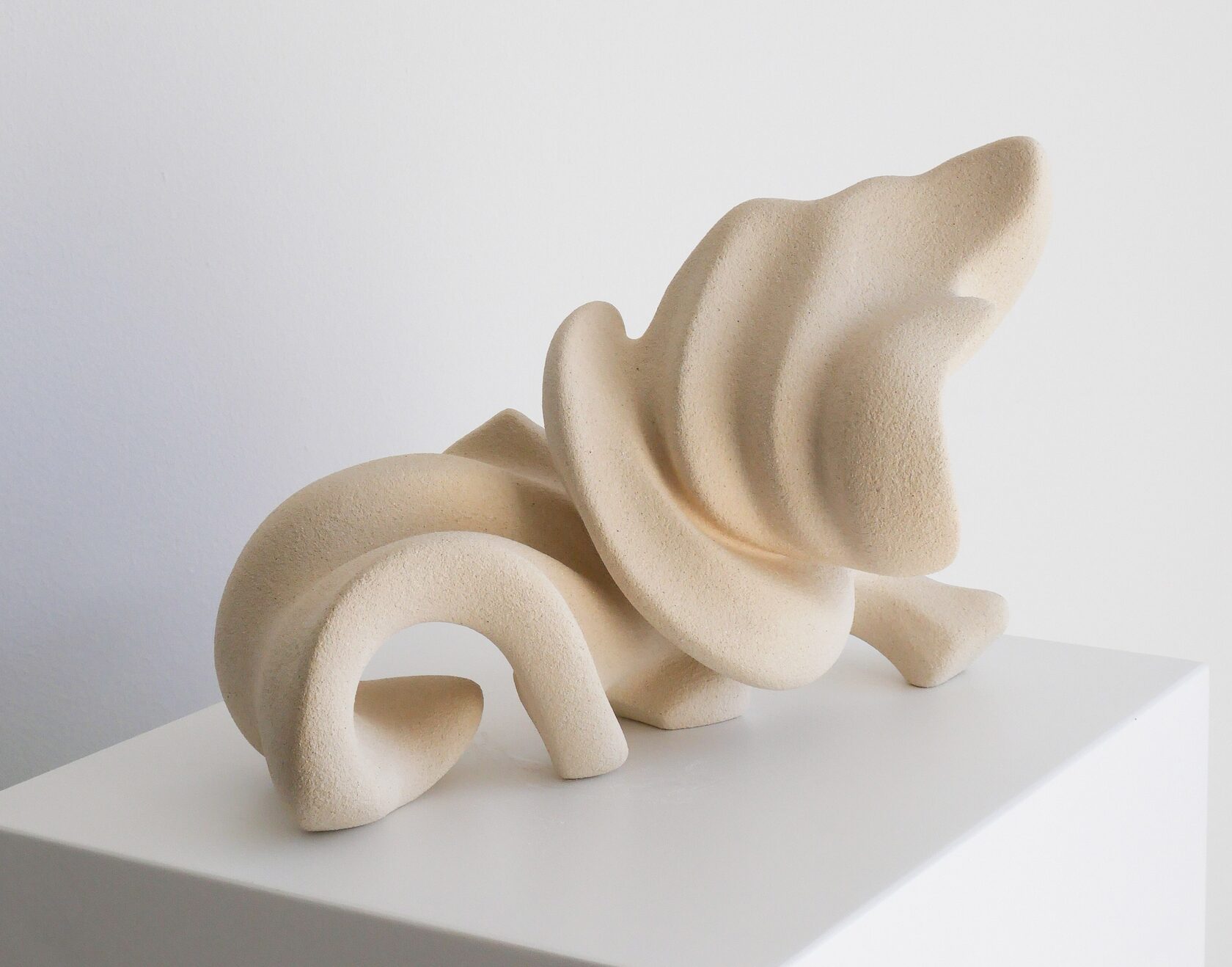
Aleksandra Krasnopolska is a Сeramic Sculptor with a background in architecture and interior design whose intuitive practice explores movement, transformation, and the relationship between form and space. What began as a personal form of art therapy gradually evolved into a distinctive sculptural language defined by flowing organic forms, delicate curves, open spaces, and restrained natural tones. Working without preliminary sketches, Krasnopolska describes her process as “flow art,” allowing each sculpture to emerge through an instinctive dialogue between her hands, the clay, and her inner state. In this interview, she discusses her unexpected journey into ceramics, the influence of architecture and fine art on her practice, the technical unpredictability of clay, and her understanding of sculpture as a living record of personal transformation.
Could you introduce yourself and tell us about your journey as an artist? When did you first realize that ceramics could become your main form of creative expression?
My name is Aleksandra Krasnopolska, and I am a ceramic sculptor with a background in architecture and interior design. My journey into ceramics began about five years ago, quite spontaneously. At that time, I had no plans to become a ceramic artist; this passion developed as an intuitive form of art therapy that helped me navigate a difficult period in my life.
I became so deeply immersed in the meditative process of working with clay that I simply couldn’t stop. What began as a therapeutic outlet gradually evolved into a full-fledged form of creative expression, and today, ceramic sculpture is my main artistic practice.
My name is Aleksandra Krasnopolska, and I am a ceramic sculptor with a background in architecture and interior design. My journey into ceramics began about five years ago, quite spontaneously. At that time, I had no plans to become a ceramic artist; this passion developed as an intuitive form of art therapy that helped me navigate a difficult period in my life.
I became so deeply immersed in the meditative process of working with clay that I simply couldn’t stop. What began as a therapeutic outlet gradually evolved into a full-fledged form of creative expression, and today, ceramic sculpture is my main artistic practice.
What is your educational background? Did you receive formal training in ceramics, sculpture, or fine art, and what experiences have influenced your development most strongly?
I hold a degree in architecture from Odessa State Academy of Civil Engineering and Architecture, which has deeply influenced my artistic practice. I also studied drawing and painting under the renowned Ukrainian artists Viktor Chernov and Ivan Palamar, which provided me with a solid foundation in the fine arts.
However, I have never received formal training in ceramics or sculpture. In this regard, I consider myself self-taught as a sculptor. I discovered the nuances of the material independently through trial and error, though I am deeply grateful to my friends who guided me and taught me proper firing techniques.
I hold a degree in architecture from Odessa State Academy of Civil Engineering and Architecture, which has deeply influenced my artistic practice. I also studied drawing and painting under the renowned Ukrainian artists Viktor Chernov and Ivan Palamar, which provided me with a solid foundation in the fine arts.
However, I have never received formal training in ceramics or sculpture. In this regard, I consider myself self-taught as a sculptor. I discovered the nuances of the material independently through trial and error, though I am deeply grateful to my friends who guided me and taught me proper firing techniques.
How did you first begin working with clay, and what qualities of this material continue to fascinate you today?
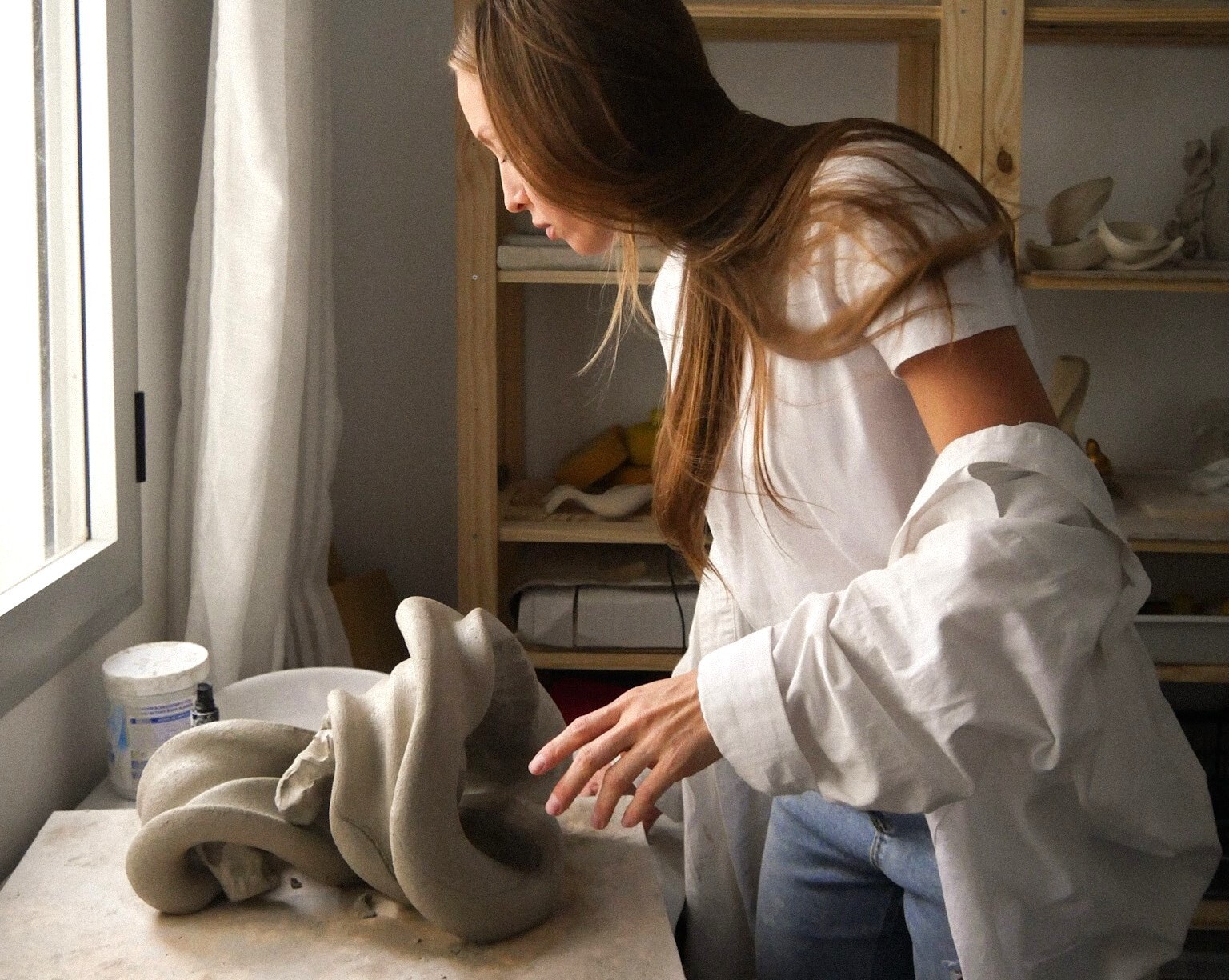
I simply bought the first Ukrainian clay I came across. It turned out to be a terracotta intended for wheel throwing - something I had absolutely no idea about at the time!
I started sculpting without a plan, giving complete freedom to my hands and imagination. I can honestly say that clay turned out to be an excellent personal art therapist; I became so absorbed in the process that I would spend hours working without noticing the passage of time.
What fascinates me most about clay today is its ability to provide a profound sense of grounding and calm. That feeling of being completely present, connected to both the material and myself, is something I still experience every single time I work with it.
I simply bought the first Ukrainian clay I came across. It turned out to be a terracotta intended for wheel throwing - something I had absolutely no idea about at the time!
I started sculpting without a plan, giving complete freedom to my hands and imagination. I can honestly say that clay turned out to be an excellent personal art therapist; I became so absorbed in the process that I would spend hours working without noticing the passage of time.
What fascinates me most about clay today is its ability to provide a profound sense of grounding and calm. That feeling of being completely present, connected to both the material and myself, is something I still experience every single time I work with it.
Your work has a very distinctive sculptural language built around soft, flowing, organic forms. How did this visual language develop, and what are its main sources of inspiration?
I am absolutely convinced that every artist ultimately reveals themselves through their work. When you are honest, first and foremost with yourself, this authenticity naturally crystallizes into a recognizable artistic language. In that sense, by looking at my work, you are simply getting to know me. And perhaps, through a shared resonance, you may discover something within yourself as well and have your own unique experience.
I am absolutely convinced that every artist ultimately reveals themselves through their work. When you are honest, first and foremost with yourself, this authenticity naturally crystallizes into a recognizable artistic language. In that sense, by looking at my work, you are simply getting to know me. And perhaps, through a shared resonance, you may discover something within yourself as well and have your own unique experience.
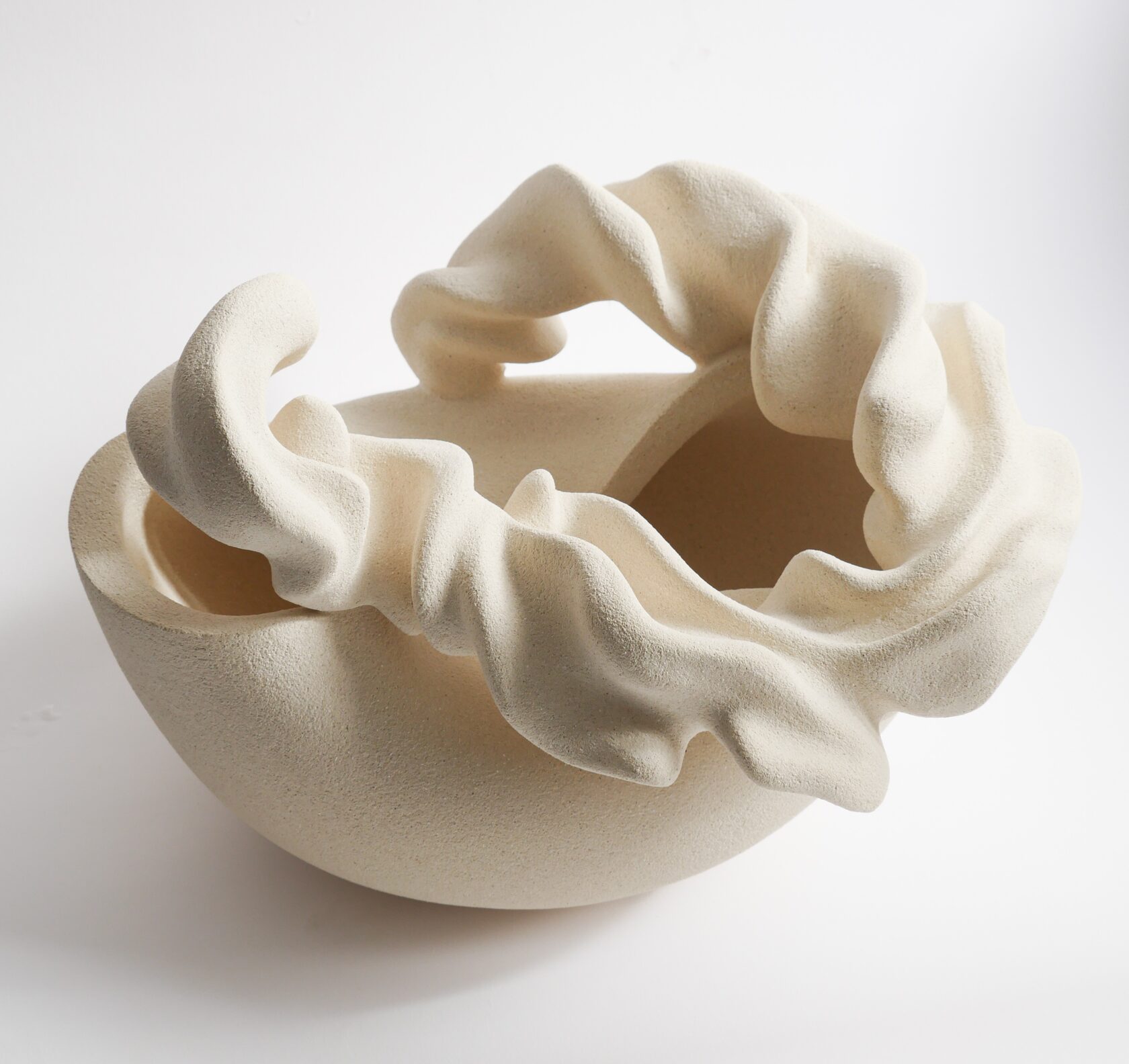
Although clay is a solid material once fired, your sculptures often appear soft, weightless, and almost fabric-like. How do you create this sense of movement and fluidity?
Maybe it’s simply because my sculptures are alive — and movement is life, isn’t it? ;)
Maybe it’s simply because my sculptures are alive — and movement is life, isn’t it? ;)
Many of your pieces seem to grow, fold, twist, or unfold naturally rather than follow strict geometric structures. Are you influenced by flowers, shells, the human body, fabric, or other forms found in nature?
I deeply love nature and its inherent beauty: the soft aesthetics of the female body, the delicate beauty of flowers, and the immense power and beauty of the ocean…However, I wouldn’t say that any of these are direct sources of inspiration for my work. Rather than inspiring me in a literal sense, it nourishes me. Nature fills me, helping me slow down and tune into my inner nature. And from that state of fullness and connection, I naturally feel the desire to give form to what is within.
I deeply love nature and its inherent beauty: the soft aesthetics of the female body, the delicate beauty of flowers, and the immense power and beauty of the ocean…However, I wouldn’t say that any of these are direct sources of inspiration for my work. Rather than inspiring me in a literal sense, it nourishes me. Nature fills me, helping me slow down and tune into my inner nature. And from that state of fullness and connection, I naturally feel the desire to give form to what is within.
Could you take us through your creative process, from the first idea to the finished ceramic piece? Do you begin with sketches and models, or do you allow the form to develop intuitively while working with clay?
I never sketch or plan my pieces in advance. Sometimes a vague image appears in my mind, and I use it as a starting point, but the final sculpture rarely resembles what I initially imagined.
I describe my creative process as “flow art.” It is entirely intuitive - a way of allowing the clay to reflect my inner state and energy in the present moment.
I never sketch or plan my pieces in advance. Sometimes a vague image appears in my mind, and I use it as a starting point, but the final sculpture rarely resembles what I initially imagined.
I describe my creative process as “flow art.” It is entirely intuitive - a way of allowing the clay to reflect my inner state and energy in the present moment.
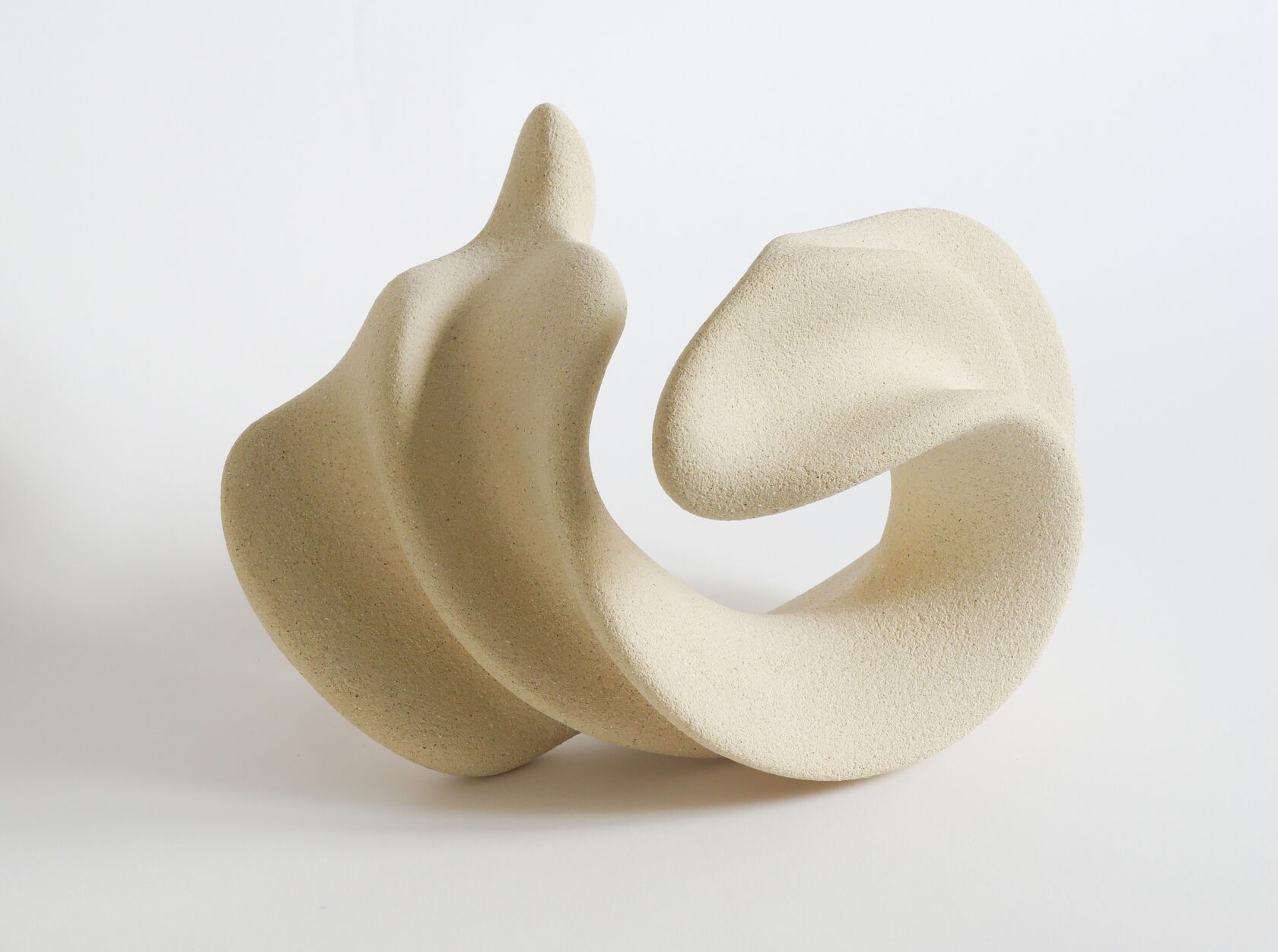
The relationship between positive and negative space is particularly striking in your work. How important are openings, curves, and empty spaces when you develop a composition?
I don’t think about these spatial relationships beforehand. Space simply emerges alongside the form.
When I let my hands guide me intuitively, the openings, curves, and voids become a natural extension of that physical movement. I don’t design the negative space separately—it simply finds its place within the sculpture.
I don’t think about these spatial relationships beforehand. Space simply emerges alongside the form.
When I let my hands guide me intuitively, the openings, curves, and voids become a natural extension of that physical movement. I don’t design the negative space separately—it simply finds its place within the sculpture.
Your restrained, almost monochromatic palette places great emphasis on form, light, and shadow. Is this simplicity of color a deliberate part of your artistic philosophy?
At the moment, I don’t set out with a deliberate goal to create a monochromatic palette. Instead, choosing neutral tones allows me to focus more deeply on form, movement, surface texture, and the interplay of light and shadow.
That said, I wouldn't say color is unimportant to me. I have tested many different types of clay to find the ones that best complement my work. Their natural color and surface qualities have become an essential part of both the visual and tactile experience of my sculptures.
At the moment, I don’t set out with a deliberate goal to create a monochromatic palette. Instead, choosing neutral tones allows me to focus more deeply on form, movement, surface texture, and the interplay of light and shadow.
That said, I wouldn't say color is unimportant to me. I have tested many different types of clay to find the ones that best complement my work. Their natural color and surface qualities have become an essential part of both the visual and tactile experience of my sculptures.
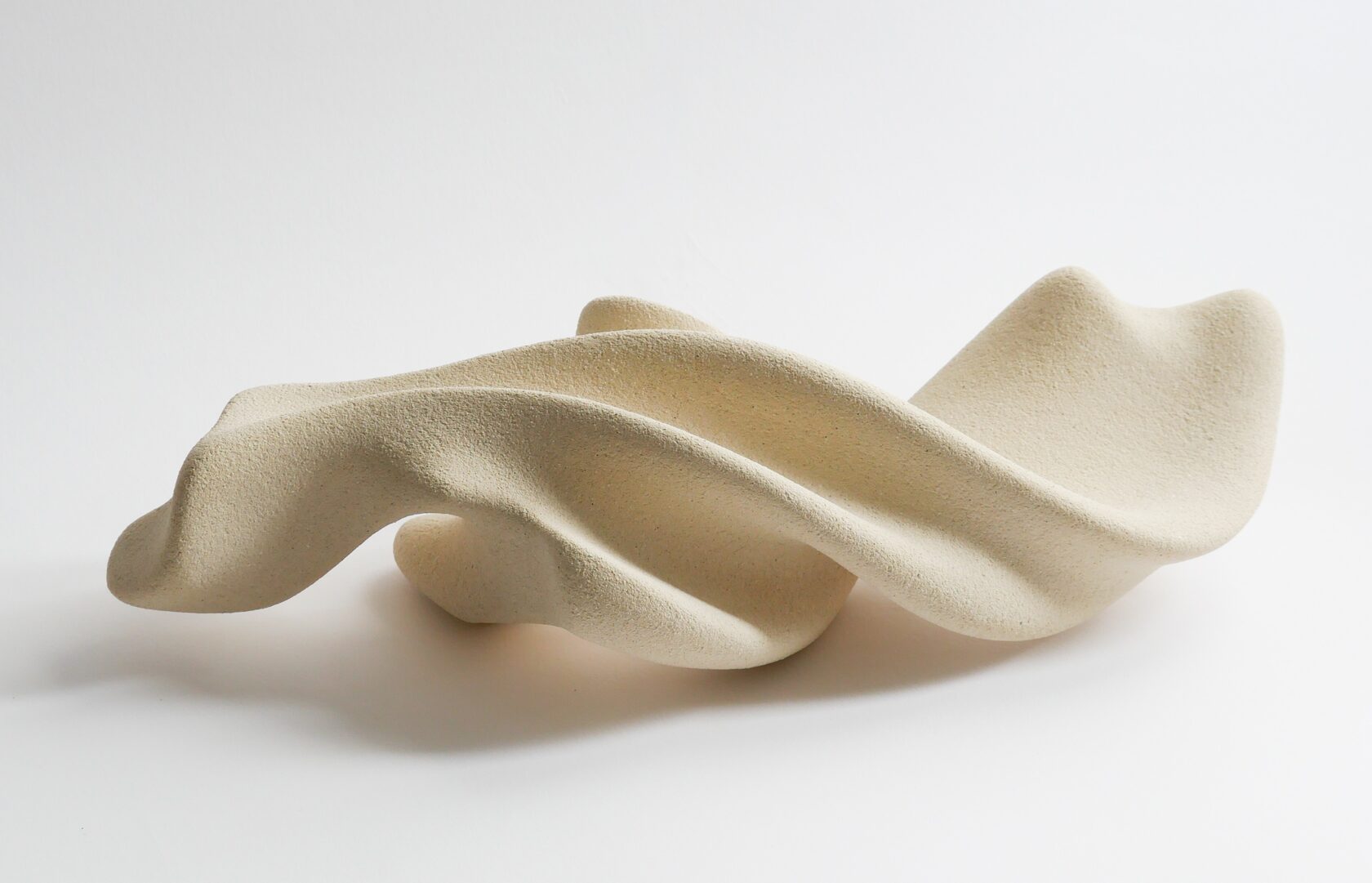
Your sculptures often exist somewhere between a vessel and an abstract sculptural object. How do you understand the relationship between function and sculpture in your practice?
For me, function is never the starting point of the form. I approach each piece as a sculpture first, even when it has a functional purpose. The function simply becomes another part of the object, rather than determining its form.
For me, function is never the starting point of the form. I approach each piece as a sculpture first, even when it has a functional purpose. The function simply becomes another part of the object, rather than determining its form.
There is a strong sense of movement in your work, as if the forms have been captured in the middle of a transformation. Are ideas such as growth, movement, change, or transformation important to the meaning of your work?
I think this is the core structure of my work. In fact, my very turn to sculpture was the result of profound inner growth and personal work. Each of my pieces is like a personal diary where I record my experiences of transformation and insights. But I don’t want my work to give the viewer something to intellectually decode. Instead, I invite them to connect with themselves through an intuitive, sensory response — to discover what the work evokes or awakens in them.
I think this is the core structure of my work. In fact, my very turn to sculpture was the result of profound inner growth and personal work. Each of my pieces is like a personal diary where I record my experiences of transformation and insights. But I don’t want my work to give the viewer something to intellectually decode. Instead, I invite them to connect with themselves through an intuitive, sensory response — to discover what the work evokes or awakens in them.
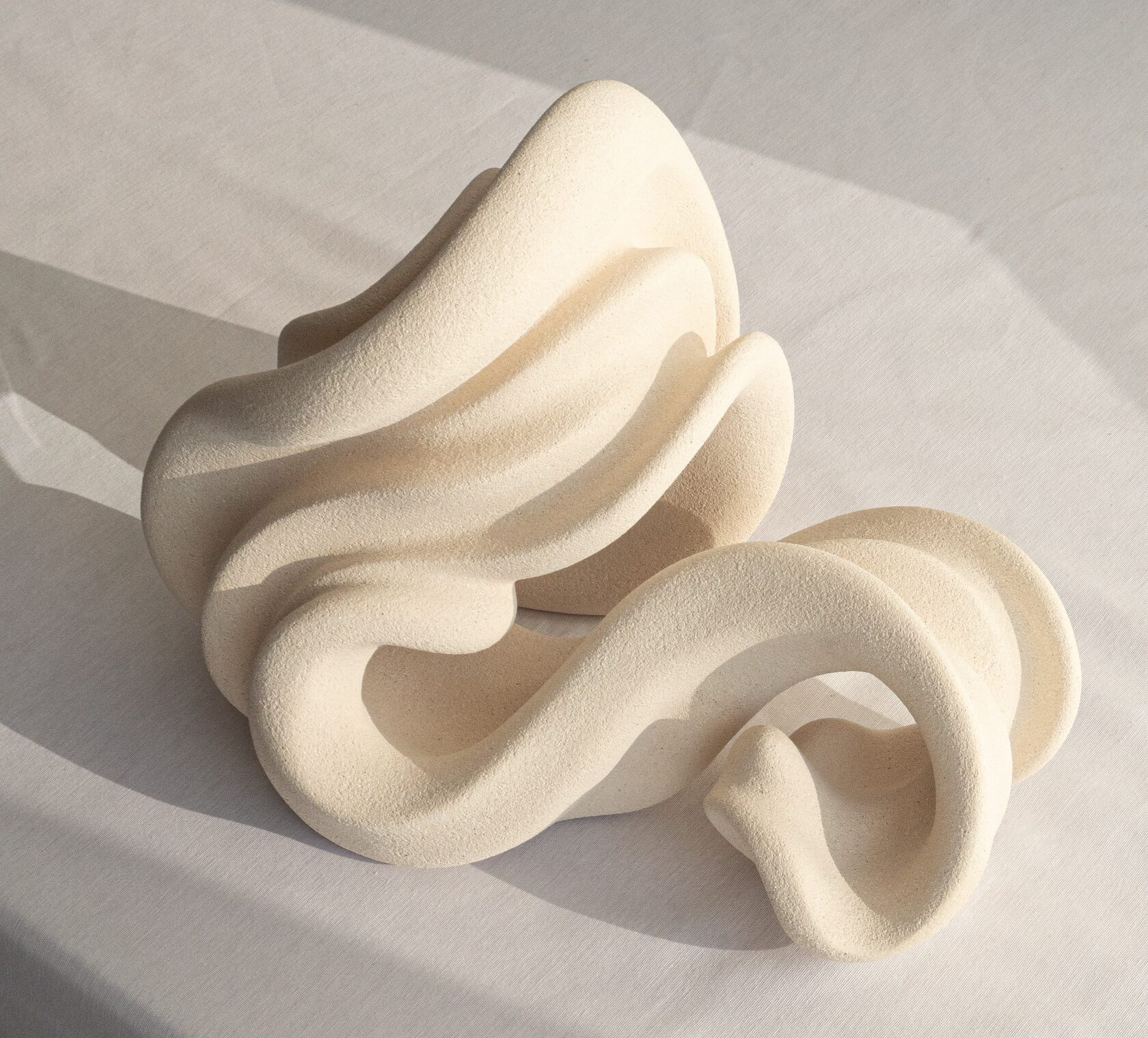
Working with such delicate curves and complex forms must involve technical challenges. What is the most difficult part of creating these pieces, and how much experimentation is required to achieve the final result?
In ceramics, we face risks at almost every stage of creation. This material is truly not for the faint-hearted.
For me personally, the most technically challenging part is the building process. Due to its own weight and the softness of the clay, a sculpture can easily collapse while it is still being shaped. Then there is always the risk of cracking, warping, or even exploding during firing. So every time I open the kiln and find a piece intact, I still feel a childlike excitement.
I wouldn’t say that I experiment a lot while creating my work. Instead, I trust the material and accept its unpredictability. Each piece either makes it through the entire journey or it doesn’t. If, for some reason, it doesn’t survive, I see it as a natural part of the process — perhaps it simply wasn’t meant to exist.
In ceramics, we face risks at almost every stage of creation. This material is truly not for the faint-hearted.
For me personally, the most technically challenging part is the building process. Due to its own weight and the softness of the clay, a sculpture can easily collapse while it is still being shaped. Then there is always the risk of cracking, warping, or even exploding during firing. So every time I open the kiln and find a piece intact, I still feel a childlike excitement.
I wouldn’t say that I experiment a lot while creating my work. Instead, I trust the material and accept its unpredictability. Each piece either makes it through the entire journey or it doesn’t. If, for some reason, it doesn’t survive, I see it as a natural part of the process — perhaps it simply wasn’t meant to exist.
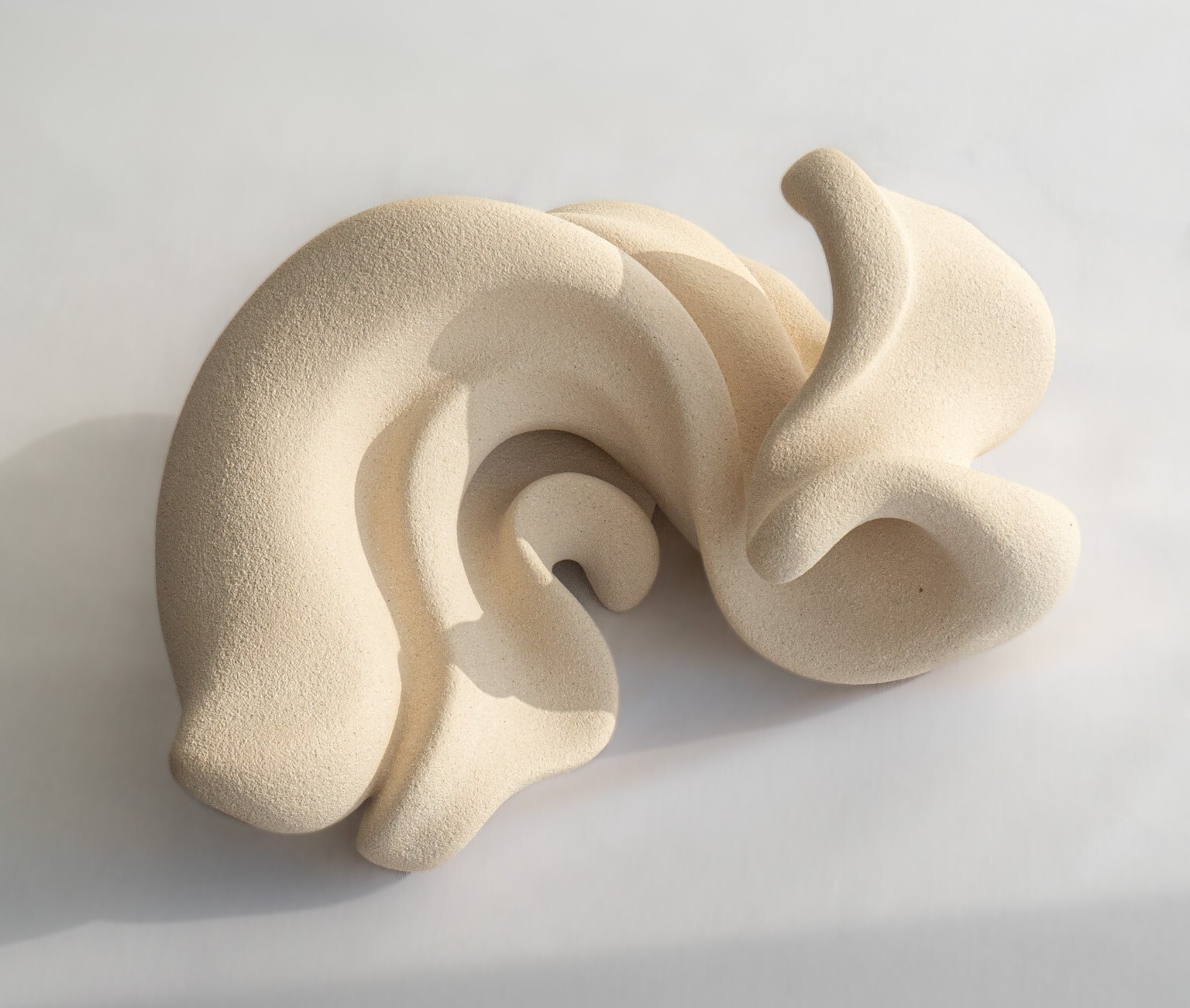
How do you see your practice evolving in the future? Would you like to explore larger-scale sculpture, installations, new materials, collaborations, or international exhibitions?
To be honest, I don’t like planning too far ahead. I try to live in the flow and allow things to unfold naturally. For me, the proverb “If you want to make God laugh, tell Him your plans” is more than just a saying.
I do have some ideas about introducing new materials into my practice and perhaps exploring new directions, but I am someone who takes time to let an idea mature. I also prefer not to talk about my ideas in advance — I want them to fully take shape before sharing them with the world.
So, I don’t have a rigid roadmap for how my practice will evolve. I am much more interested in staying open to where the journey takes me — and perhaps it will surprise me even more than my own dreams.
To be honest, I don’t like planning too far ahead. I try to live in the flow and allow things to unfold naturally. For me, the proverb “If you want to make God laugh, tell Him your plans” is more than just a saying.
I do have some ideas about introducing new materials into my practice and perhaps exploring new directions, but I am someone who takes time to let an idea mature. I also prefer not to talk about my ideas in advance — I want them to fully take shape before sharing them with the world.
So, I don’t have a rigid roadmap for how my practice will evolve. I am much more interested in staying open to where the journey takes me — and perhaps it will surprise me even more than my own dreams.
Was there a particular work, collection, exhibition, mentor, or experience that became a turning point in your career and helped you define your artistic identity?
In fact, there hasn’t been a single work, exhibition, or specific experience that marked a turning point in my career.
My artistic language has developed gradually and naturally—through the continuous process of creation, inner transformation, and a deepening understanding of what truly resonates with me.
Therefore, I see my artistic identity as something alive that continues to evolve.
In fact, there hasn’t been a single work, exhibition, or specific experience that marked a turning point in my career.
My artistic language has developed gradually and naturally—through the continuous process of creation, inner transformation, and a deepening understanding of what truly resonates with me.
Therefore, I see my artistic identity as something alive that continues to evolve.
Interested in discovering more from this talented artist?
Explore the portfolio, follow new projects, and connect through the link below.
Instagram: @krasnopolska_aleksandra
E-mail: aleksandra@krasnopolska.art
Phone: +34 608 284 715
www.krasnopolska.art
Explore the portfolio, follow new projects, and connect through the link below.
Instagram: @krasnopolska_aleksandra
E-mail: aleksandra@krasnopolska.art
Phone: +34 608 284 715
www.krasnopolska.art
Miami, Fl