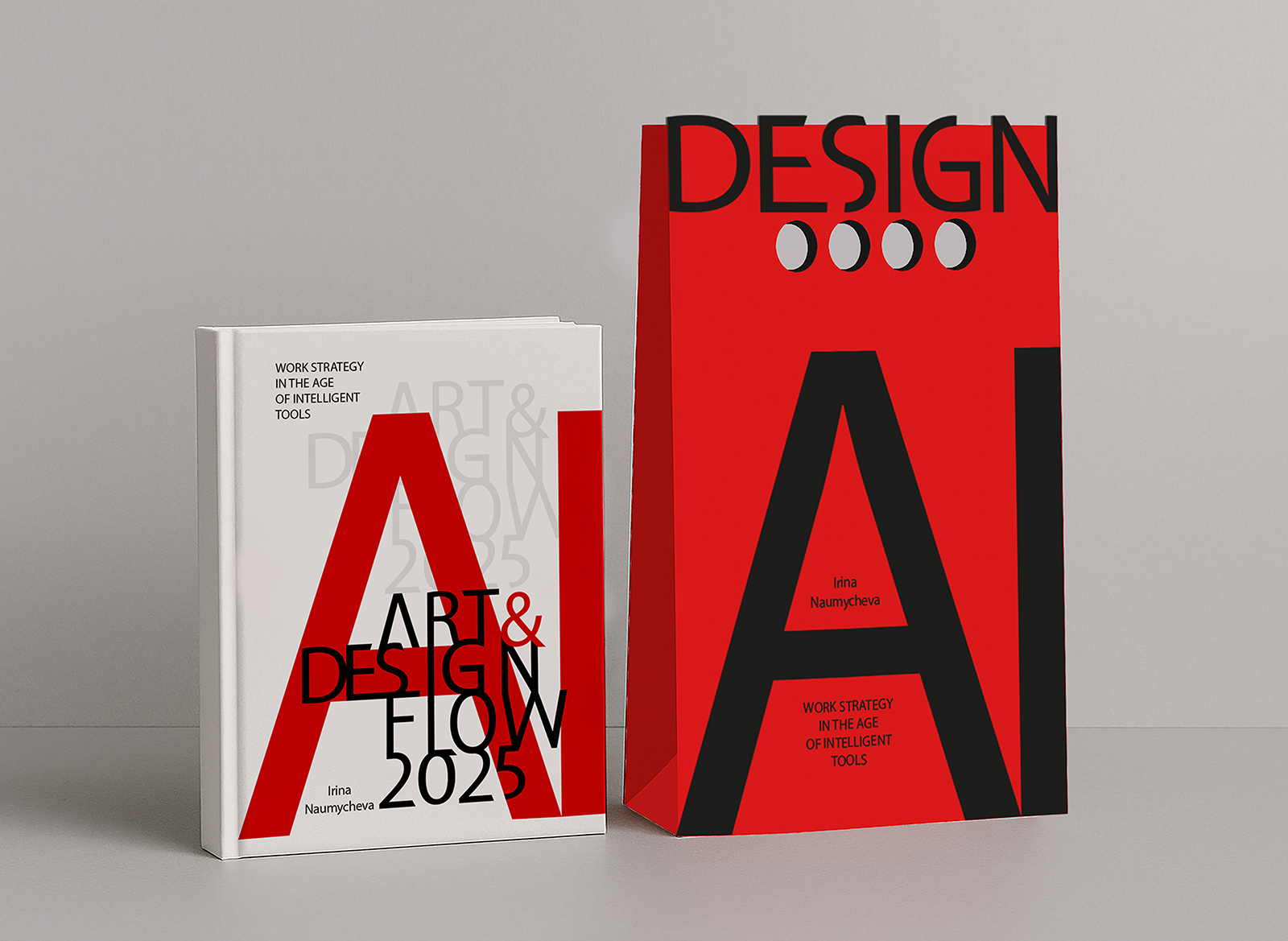
The instructional guide explores the integration of artificial intelligence technologies into the processes of graphic and digital design. In the context of the rapid development of machine learning algorithms and generative models, the design community is facing the urgent task of rethinking traditional approaches to visual communication.
The publication presents the original methodology AI-Art & Design Flow 2025 — an innovative framework for the systemic integration of AI tools across all stages of the design process, from conceptual analysis to project finalization. The methodology is aimed at enhancing efficiency, creative diversity, and the overall quality of visual solutions through the rational use of AI technologies in synergy with the designer’s professional expertise.
The publication presents the original methodology AI-Art & Design Flow 2025 — an innovative framework for the systemic integration of AI tools across all stages of the design process, from conceptual analysis to project finalization. The methodology is aimed at enhancing efficiency, creative diversity, and the overall quality of visual solutions through the rational use of AI technologies in synergy with the designer’s professional expertise.
About the project
The guide outlines the theoretical foundations of AI application in design, offers a critical analysis of current tools, and discusses potential risks and ethical concerns. Special attention is given to the evolving role of the designer in the age of algorithms, as well as practical recommendations for implementing the methodology within studios and individual practices.
This guide is intended for professionals in graphic design, UI/UX, and visual communications, as well as researchers exploring digital creativity and the relationship between humans and intelligent technologies.
This guide is intended for professionals in graphic design, UI/UX, and visual communications, as well as researchers exploring digital creativity and the relationship between humans and intelligent technologies.

Design objectives and solutions
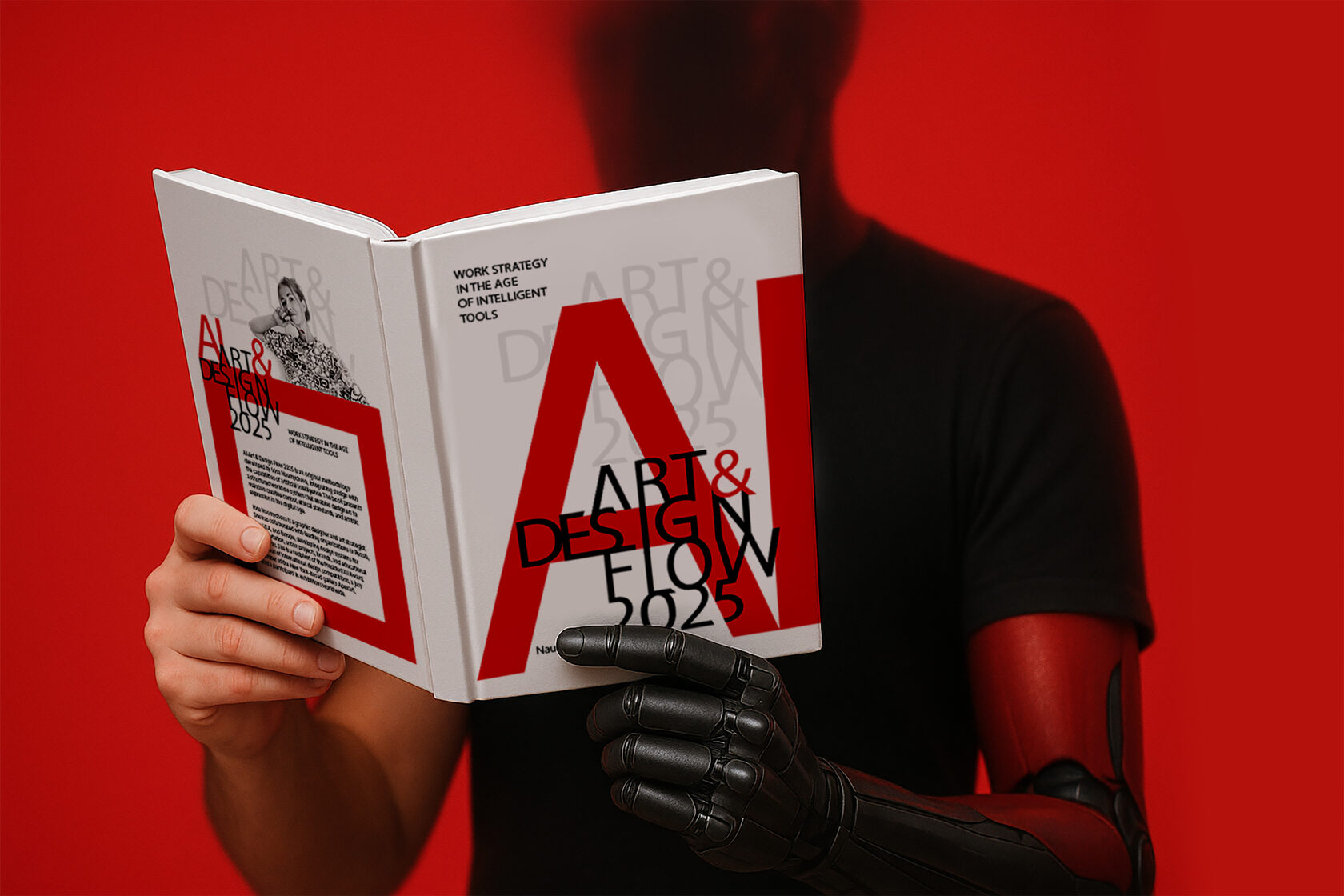
The main goal of the project was to visualize the conceptual and emotional connection between the designer and the machine. The design was intended to reflect both the technical depth and the emotional resonance of a new creative workflow — accessible to both professionals and design students.
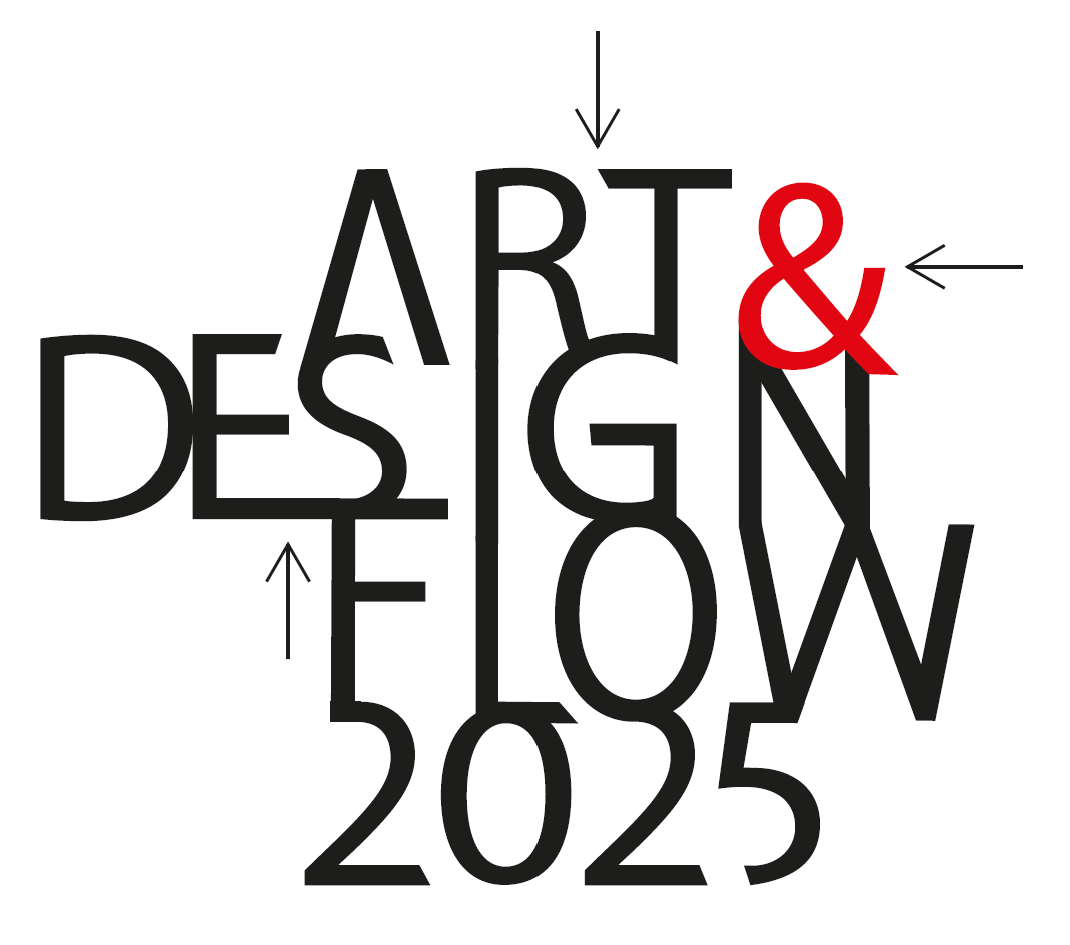
Conceptual design solution for the typography
This typography is a conceptual visual statement where the letters do more than form a title — they become a metaphor for the fusion of human and machine, the central theme of AI-Art & Design Flow 2025. This typography serves as a visual manifesto of a new design paradigm — a graphic philosophy of unity between human creativity and artificial intelligence.
- Fusion and overlap
- Red ampersand as connector
- Organic vs. mechanical
- Vertical structure
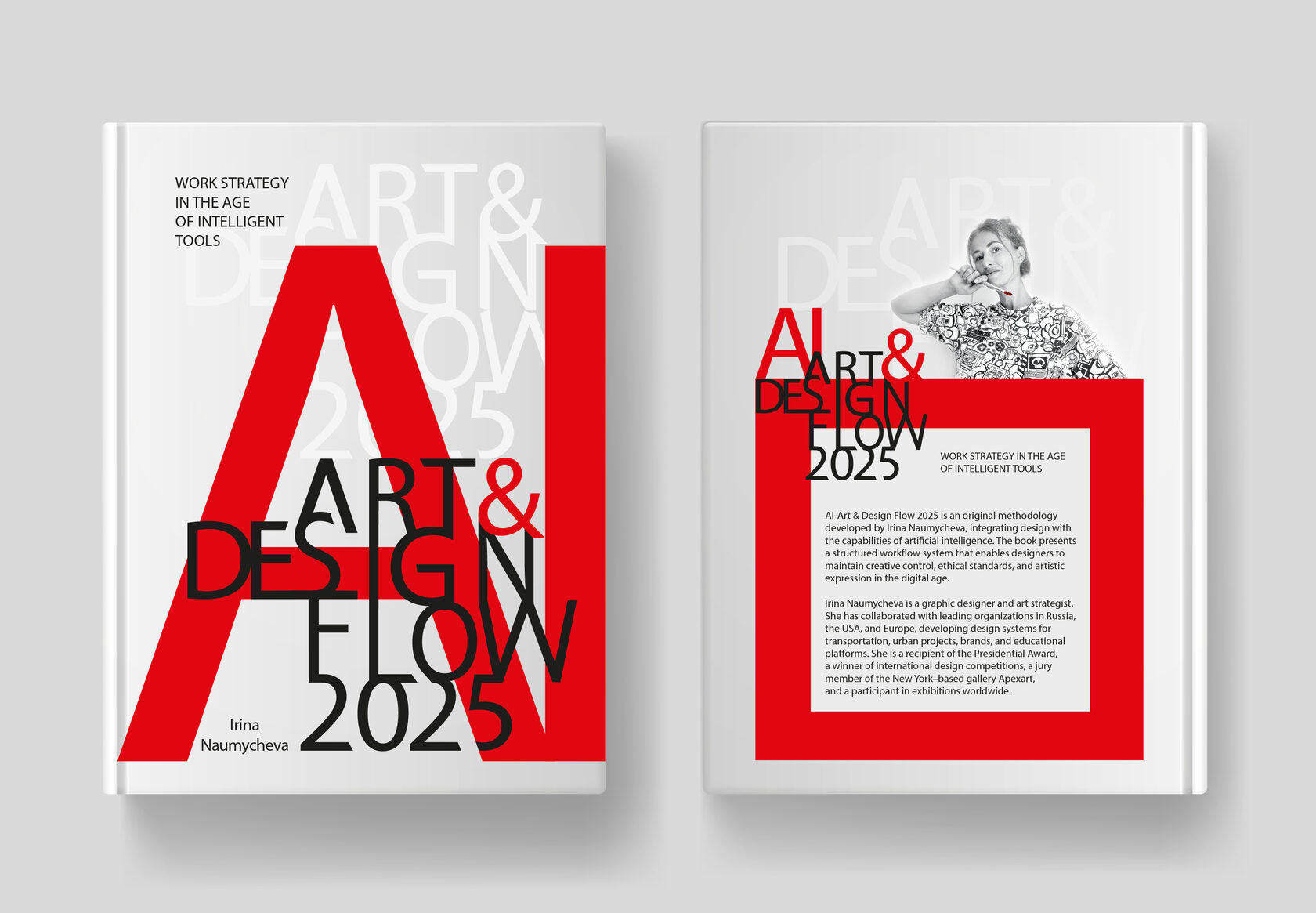
Conceptual design solution for the cover
The core design elements are guided by the principles of minimalism, clarity, and semantic depth:
- Creative typography
- Bold color palette
- Spot UV effect
This technique symbolizes the presence of "invisible intelligence" — artificial intelligence that quietly permeates the creative process. The repetition of the title in a hidden yet tangible layer emphasizes the coexistence of the visible and the unseen, the emotional and the algorithmic. It serves as a metaphor for AI as the “second layer” of design — unobtrusive, yet present, enhancing and supporting the work.
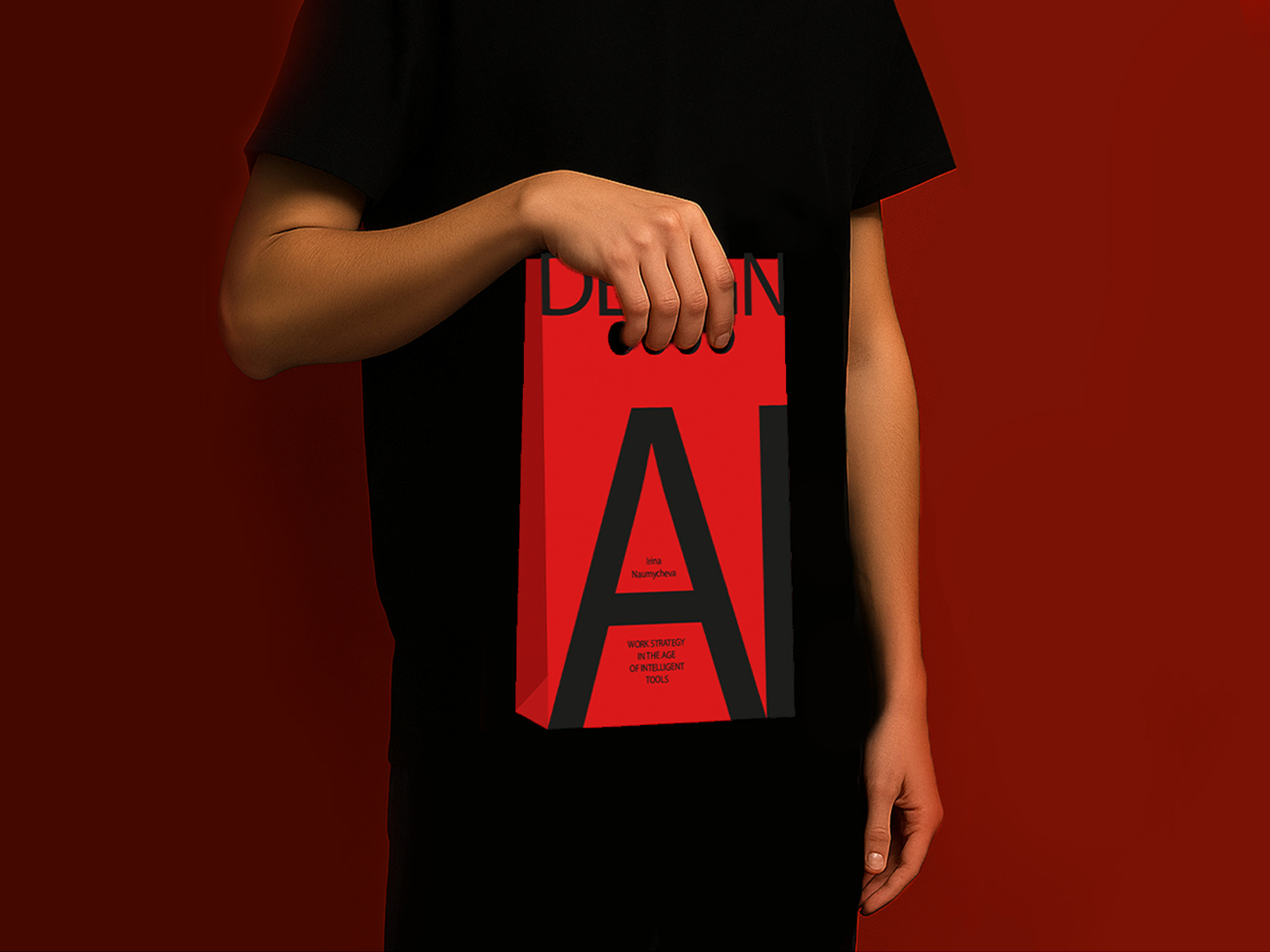
Conceptual design solution for the packaging
The packaging takes the form of a stylish, rigid cardboard bag designed in a minimalist aesthetic with a bright red background and large-scale typography.
- Creative effect
- Bold color palette
This bag is more than just packaging — it is an art object and a visual manifesto that complements the conceptual message of AI-Art & Design Flow 2025.
Project impact
- Filipp Tour, Art director in duPont Registry Group
- PhD Alexander Pushkaryov, National Research University MPEI
- Polina Korobchinskaya, Co-Founder of Art Bird International Creative Center
- Jose Villarreal, ArtDaily magazine