INTERVIEW
Louie Beidas, Artist
🌍︎ Goslar, Germany
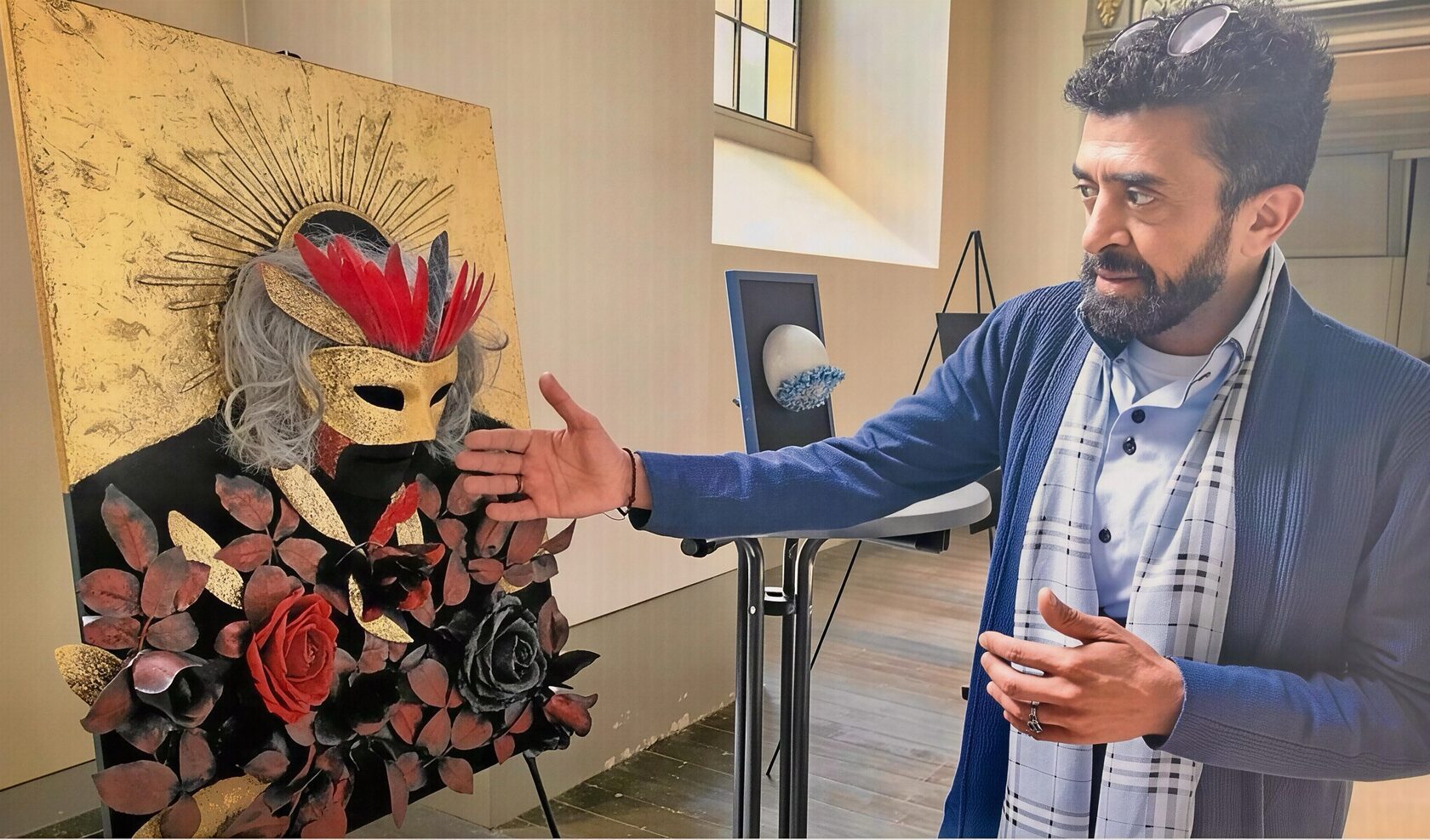
Born in Kuwait and now based in Germany, Louie Beidas came to art through an unexpected path, returning to a passion that had been with him since childhood. In 2026, his first solo exhibition in Goslar marked the beginning of a new chapter and introduced a deeply personal artistic world shaped by powerful life experiences. Working with dramatic blacks, gold, red, masks, crowns, moons, and other recurring symbols, Beidas transforms memories of darkness, emotional struggle, and the search for freedom into works about resilience, hope, and transformation. In this interview, he shares the experiences behind his art, the meanings hidden within his symbolic language, and the story of an artistic journey that is only beginning.
Could you tell us a little about yourself? Where were you born, what is your educational background, and how did your journey into art begin?
My name is Louie Beidas. I was born in Kuwait, but life has always been somewhat adventurous for my family. We moved between several countries, from Kuwait to Dubai and Singapore, and I eventually settled in Germany in 2019. Of course, no one knows what the future holds or where I may find myself a few years from now.
I have been interested in drawing since I was about five years old, according to my mother. Perhaps, in a way, being good at school became a kind of “curse.” When I finished school, I wanted to study interior design or something connected to my artistic interests and abilities. However, because my grades were very high, my family felt that I should pursue a field that reflected my academic performance. So I studied pharmacy and worked as a pharmacist until I was given the opportunity to have my first art exhibition here in Goslar, Germany.
My name is Louie Beidas. I was born in Kuwait, but life has always been somewhat adventurous for my family. We moved between several countries, from Kuwait to Dubai and Singapore, and I eventually settled in Germany in 2019. Of course, no one knows what the future holds or where I may find myself a few years from now.
I have been interested in drawing since I was about five years old, according to my mother. Perhaps, in a way, being good at school became a kind of “curse.” When I finished school, I wanted to study interior design or something connected to my artistic interests and abilities. However, because my grades were very high, my family felt that I should pursue a field that reflected my academic performance. So I studied pharmacy and worked as a pharmacist until I was given the opportunity to have my first art exhibition here in Goslar, Germany.
Was there a particular moment when you realized that you wanted to pursue art professionally?
It happened almost by coincidence. In early May of this year, a good friend called me and told me that I had an opportunity to hold my own art exhibition, with a deadline in mid-June. At that point, I did not even have the artworks ready, so I had to create everything within a very short period of time.
It felt like the opportunity of a lifetime, something I had always wanted, even though I had not seriously thought about pursuing it for many years. The positive response to the exhibition genuinely surprised me. People connected with what I had created, even though I had never formally studied art or seriously developed my skills through academic or self-directed training. That experience became the moment when I began to believe in my old dream again.
It happened almost by coincidence. In early May of this year, a good friend called me and told me that I had an opportunity to hold my own art exhibition, with a deadline in mid-June. At that point, I did not even have the artworks ready, so I had to create everything within a very short period of time.
It felt like the opportunity of a lifetime, something I had always wanted, even though I had not seriously thought about pursuing it for many years. The positive response to the exhibition genuinely surprised me. People connected with what I had created, even though I had never formally studied art or seriously developed my skills through academic or self-directed training. That experience became the moment when I began to believe in my old dream again.
Where has your work been exhibited or presented so far? Has it received recognition from galleries, curators, professional organizations, competitions, or the art community?
I would still describe myself as an emerging artist. So far, my only physical exhibition has taken place here in Goslar. I created my Instagram account on August 1, 2026, less than a month ago, so everything is still very new.
Being invited by Naumy Design to be featured and interviewed is an honor for me and an important form of professional recognition at this early stage of my artistic journey. I was also featured online by Art Salon, a gallery in Germany, as part of its program supporting emerging artists. They gave me the opportunity to create an artist profile and present my work to their network of clients.
For me, these opportunities already represent a significant step forward.
I would still describe myself as an emerging artist. So far, my only physical exhibition has taken place here in Goslar. I created my Instagram account on August 1, 2026, less than a month ago, so everything is still very new.
Being invited by Naumy Design to be featured and interviewed is an honor for me and an important form of professional recognition at this early stage of my artistic journey. I was also featured online by Art Salon, a gallery in Germany, as part of its program supporting emerging artists. They gave me the opportunity to create an artist profile and present my work to their network of clients.
For me, these opportunities already represent a significant step forward.
Your work has a distinctive dark and dramatic aesthetic. How did your artistic language develop, and what has influenced it most?
I chose an exceptionally deep black as the dominant color, contrasted with shining gold and fiery red. This choice comes from a difficult personal experience that I prefer not to describe in detail. There was a period in my life when, for approximately 127 days, I did not see the light. There was only complete darkness.
Through art, I wanted to give physical form to feelings that cannot always be expressed in words. That does not necessarily mean the work has to be dramatic or depressive. In fact, I want it to suggest the opposite: hope, resilience, and at least the possibility of overcoming darkness and moving forward.
I chose an exceptionally deep black as the dominant color, contrasted with shining gold and fiery red. This choice comes from a difficult personal experience that I prefer not to describe in detail. There was a period in my life when, for approximately 127 days, I did not see the light. There was only complete darkness.
Through art, I wanted to give physical form to feelings that cannot always be expressed in words. That does not necessarily mean the work has to be dramatic or depressive. In fact, I want it to suggest the opposite: hope, resilience, and at least the possibility of overcoming darkness and moving forward.
Black, gold, red, and deep blue frequently appear throughout your work. Do these colors carry a particular symbolic or emotional meaning for you?
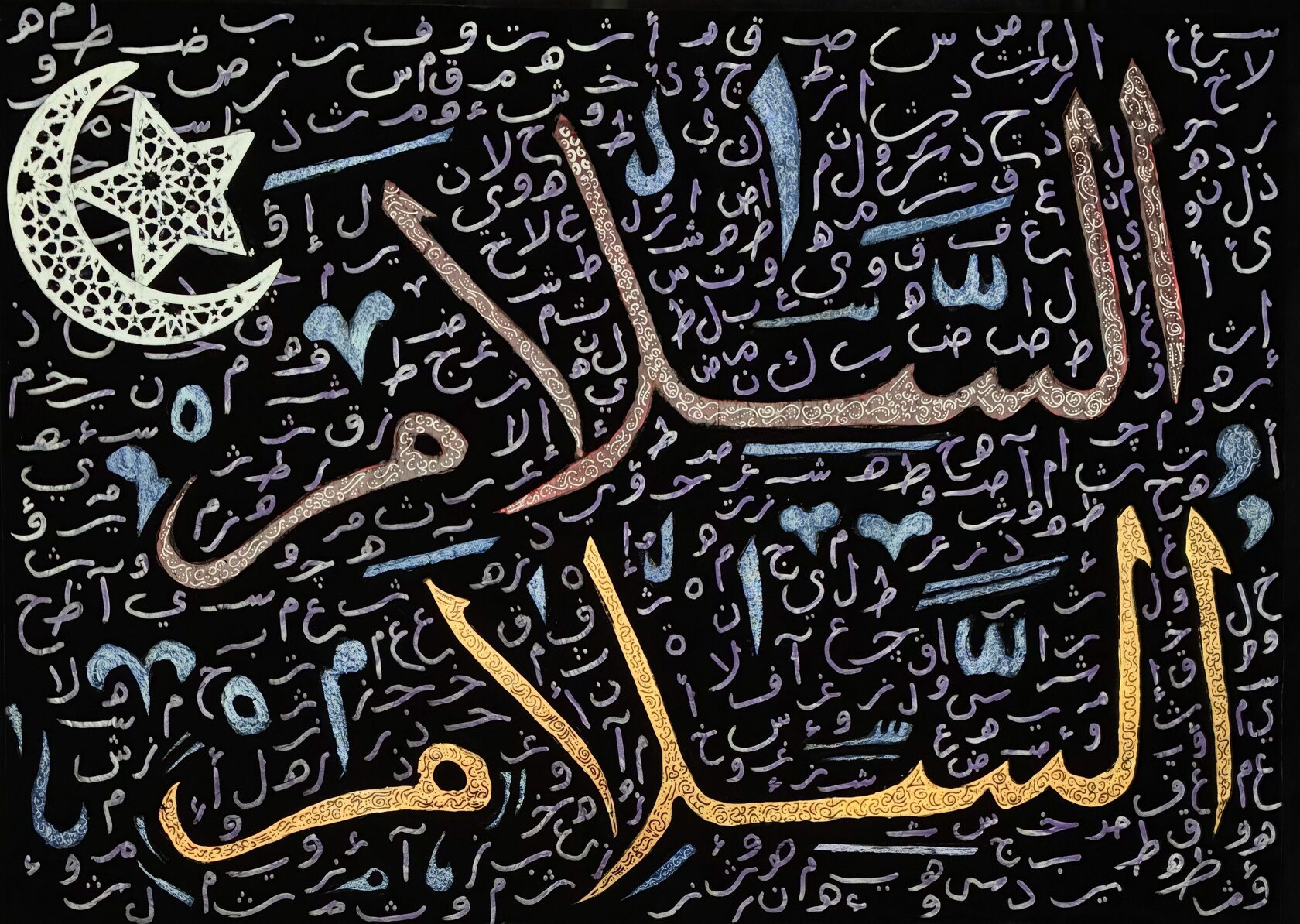
Gold, fiery red, and ultramarine blue act as luminous contrasts to the darkness of the black. I often use metallic leaf rather than paint to create this effect. Each color carries several possible meanings. Red can represent emotion, love, and passion, but it can also suggest danger, like fire. Blue creates a sense of space and peace, while gold can represent both value and deception.
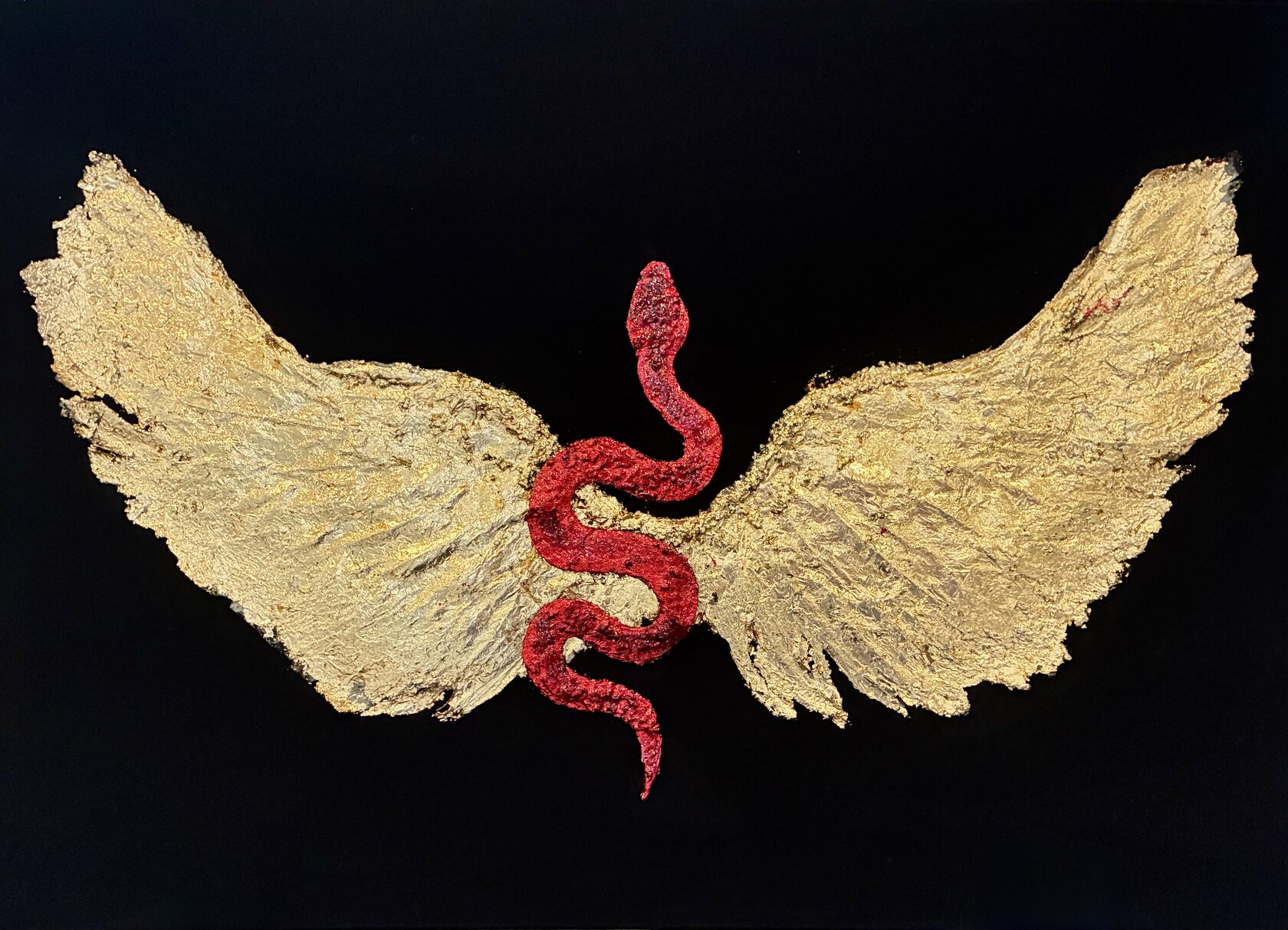
What interests me is that these combinations leave room for viewers to interpret the work differently according to their own cultural backgrounds. For example, in the work featuring a snake and wings, one viewer might associate the golden angel wings with goodness and the red snake with evil. Someone from another culture, where the snake represents wisdom and red symbolizes love, might interpret exactly the same image in an entirely different way.
I find this openness to interpretation very important. The artwork does not have to mean exactly the same thing to everyone.
Gold, fiery red, and ultramarine blue act as luminous contrasts to the darkness of the black. I often use metallic leaf rather than paint to create this effect. Each color carries several possible meanings. Red can represent emotion, love, and passion, but it can also suggest danger, like fire. Blue creates a sense of space and peace, while gold can represent both value and deception.
What interests me is that these combinations leave room for viewers to interpret the work differently according to their own cultural backgrounds. For example, in the work featuring a snake and wings, one viewer might associate the golden angel wings with goodness and the red snake with evil. Someone from another culture, where the snake represents wisdom and red symbolizes love, might interpret exactly the same image in an entirely different way.
I find this openness to interpretation very important. The artwork does not have to mean exactly the same thing to everyone.
Crowns, masks, the moon, handcuffs, doors, and other recurring symbols appear throughout your work. How important is symbolism to your practice, and where do these images come from?
My way of thinking is quite complex. I rarely think in a simple, straightforward way, perhaps partly because of my ADHD, although I cannot say for certain. Symbolism has always been part of human communication, helping us express complex ideas and stories through recognizable images.
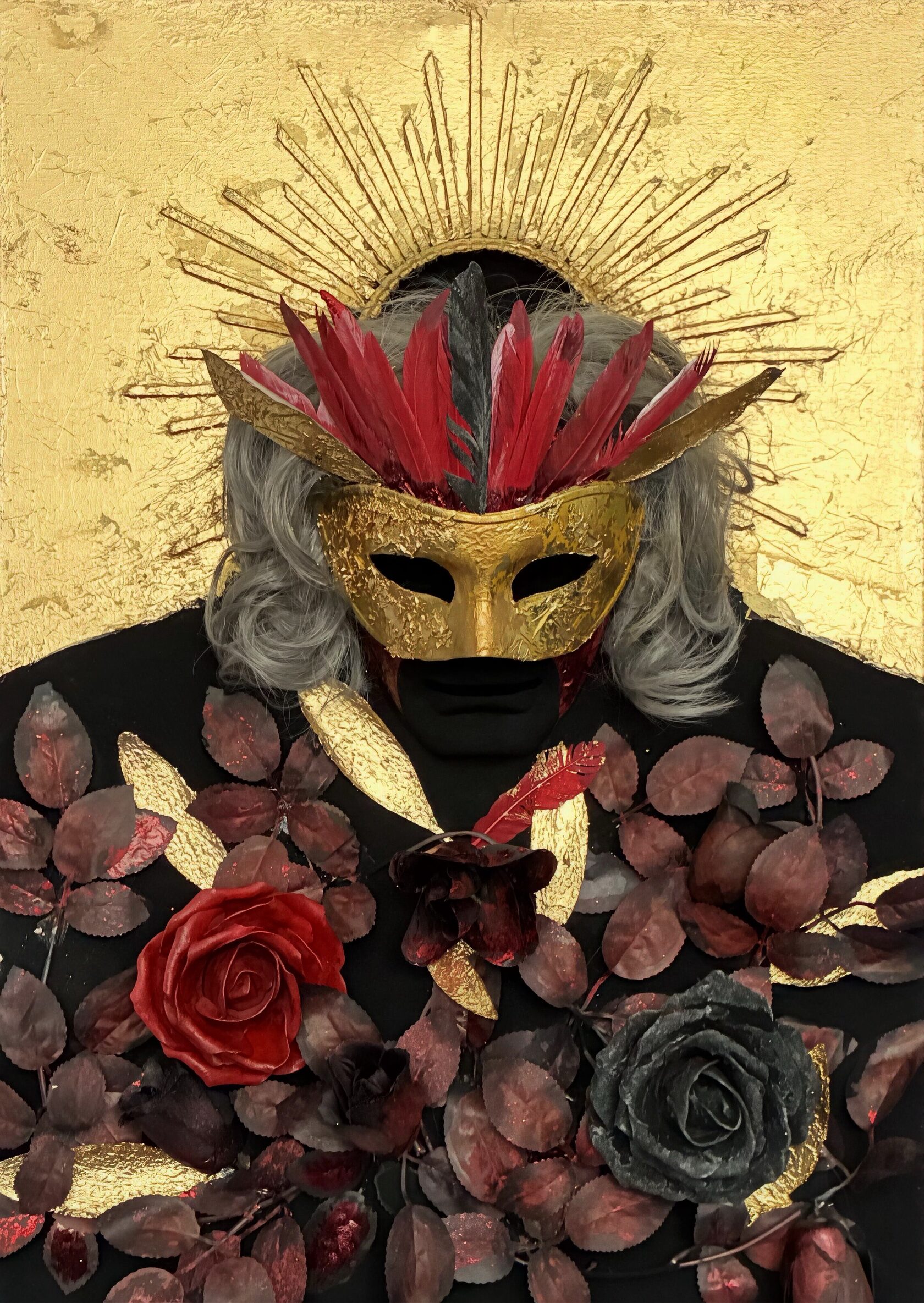
I am particularly drawn to symbols that can carry at least two opposing meanings. A door, for example, can represent hope and possibility when it is open, or a dead end when it is closed. A mask can symbolize deception, but it can also represent someone doing good anonymously, without seeking recognition.
In my imagination, I combine these symbols to create a story within a single painting or sculpture. Some of them come from cultural traditions, stories, and fairy tales, while others are connected to my own personal experiences. At the same time, I try to make the meaning universal enough for each viewer to find something they can personally relate to.
My way of thinking is quite complex. I rarely think in a simple, straightforward way, perhaps partly because of my ADHD, although I cannot say for certain. Symbolism has always been part of human communication, helping us express complex ideas and stories through recognizable images.
I am particularly drawn to symbols that can carry at least two opposing meanings. A door, for example, can represent hope and possibility when it is open, or a dead end when it is closed. A mask can symbolize deception, but it can also represent someone doing good anonymously, without seeking recognition.
In my imagination, I combine these symbols to create a story within a single painting or sculpture. Some of them come from cultural traditions, stories, and fairy tales, while others are connected to my own personal experiences. At the same time, I try to make the meaning universal enough for each viewer to find something they can personally relate to.
Some of your works feel as though they are fragments of a larger story or a mythology of your own. Is there a connection between them?
Yes, exactly. I want to tell stories from different perspectives, bringing together culture, tradition, history, and mythology within a single work and expressing them through images rather than words.
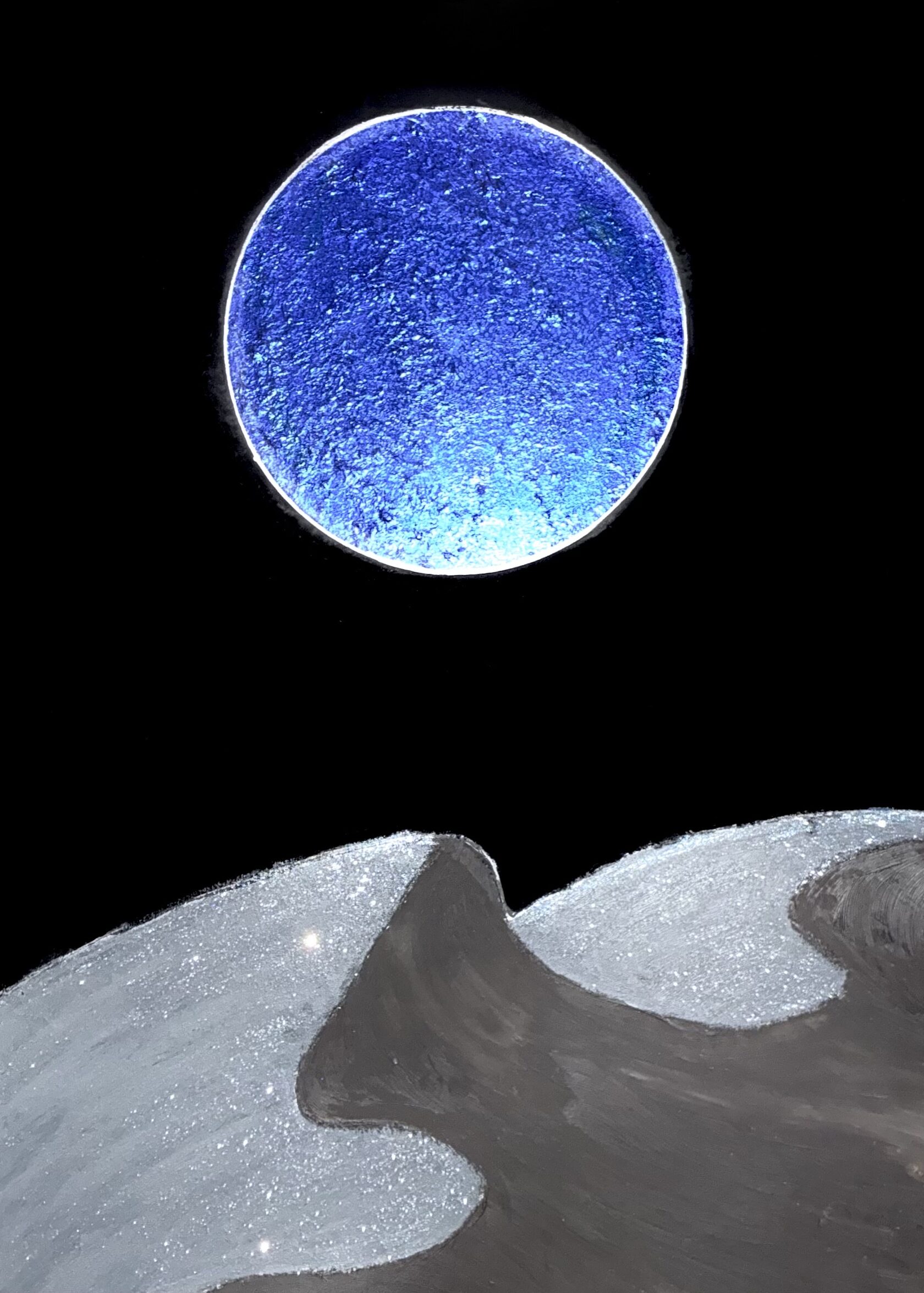
Since childhood, I have been told that I have a very active and somewhat complex imagination. Some of my works are connected to one another. For example, Diamond Night and The Garden represent two different sides of the same region. The blue moon and desert dunes at night refer to the poetic and romantic image of the desert, a landscape that has inspired poetry for centuries. The Garden, meanwhile, represents another aspect of the Arabian region and its deep historical and cultural associations with the idea of the garden.
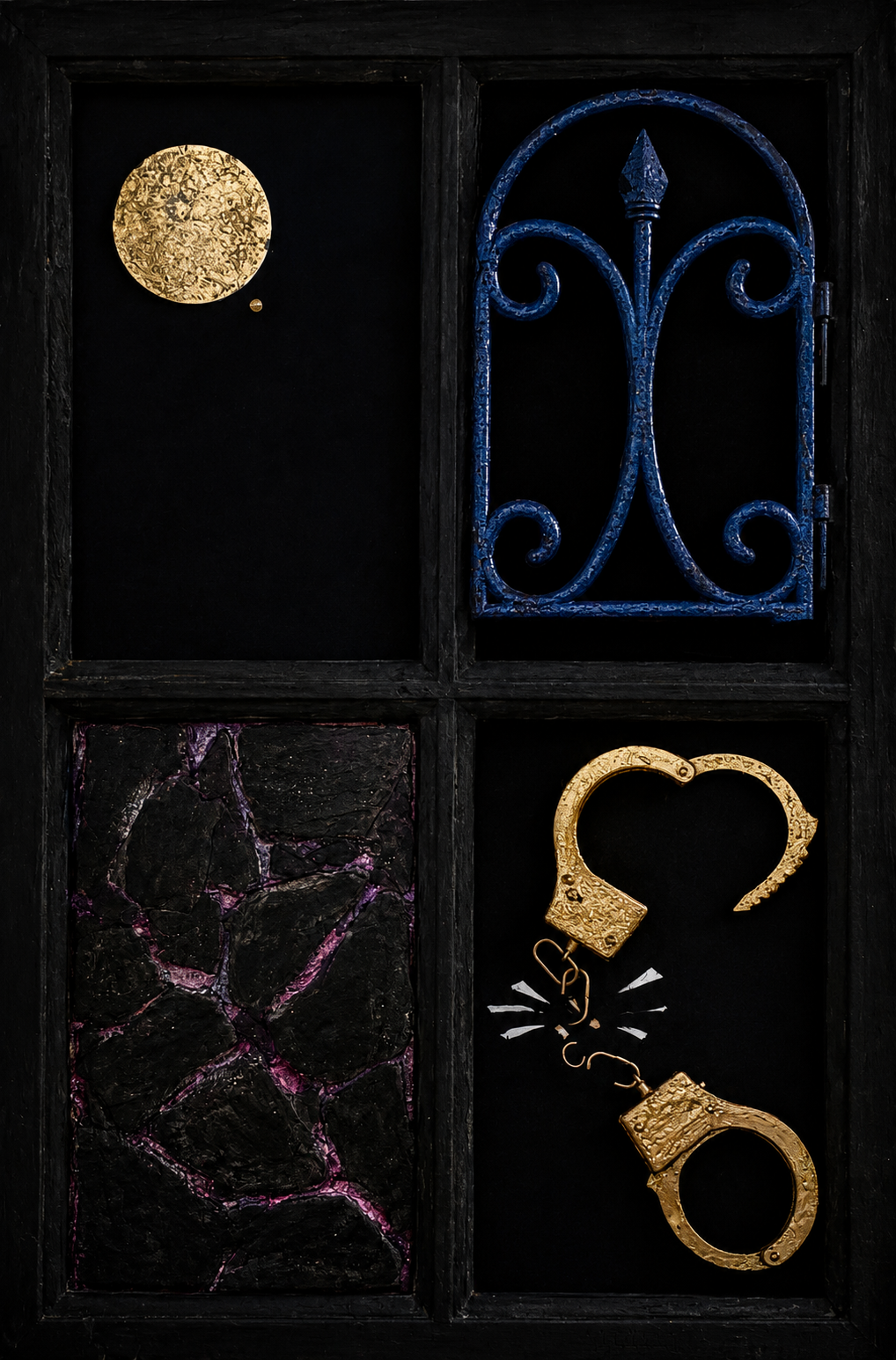
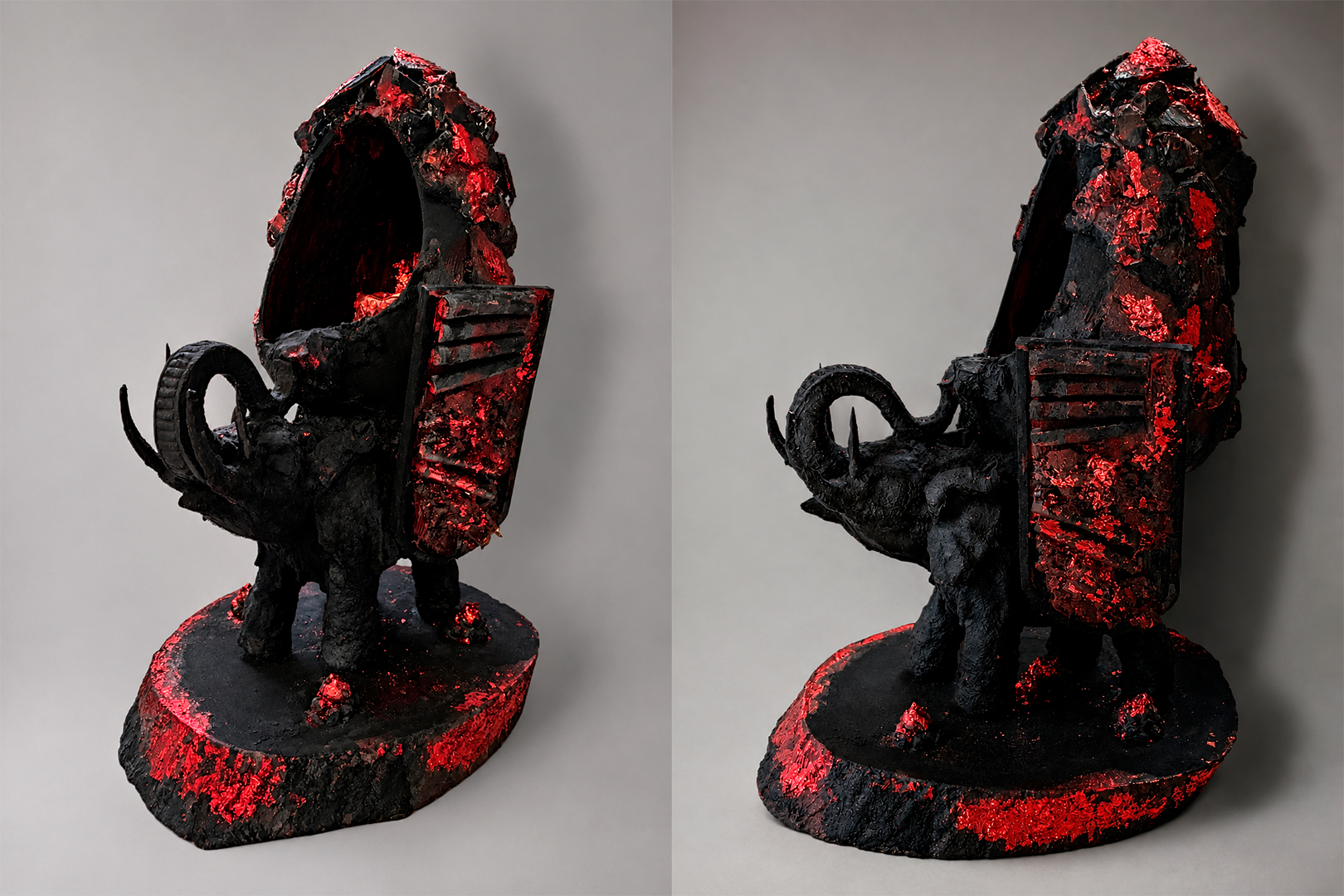
There is also a connection between the elephant carrying hell and the window-frame work. Both deal with the difficulties we face in life and with situations in which danger may appear unavoidable, yet there is still a possibility of overcoming it.
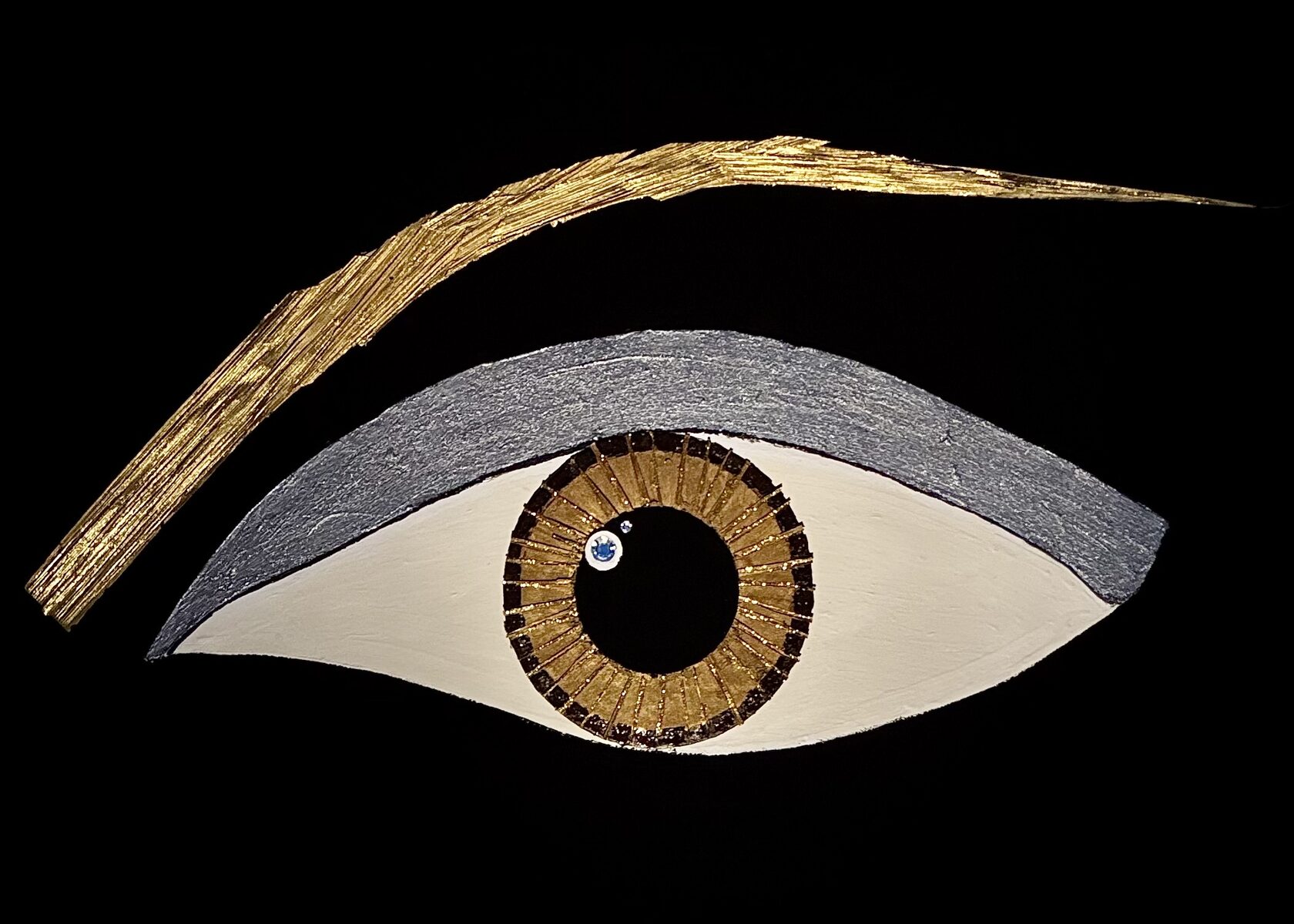
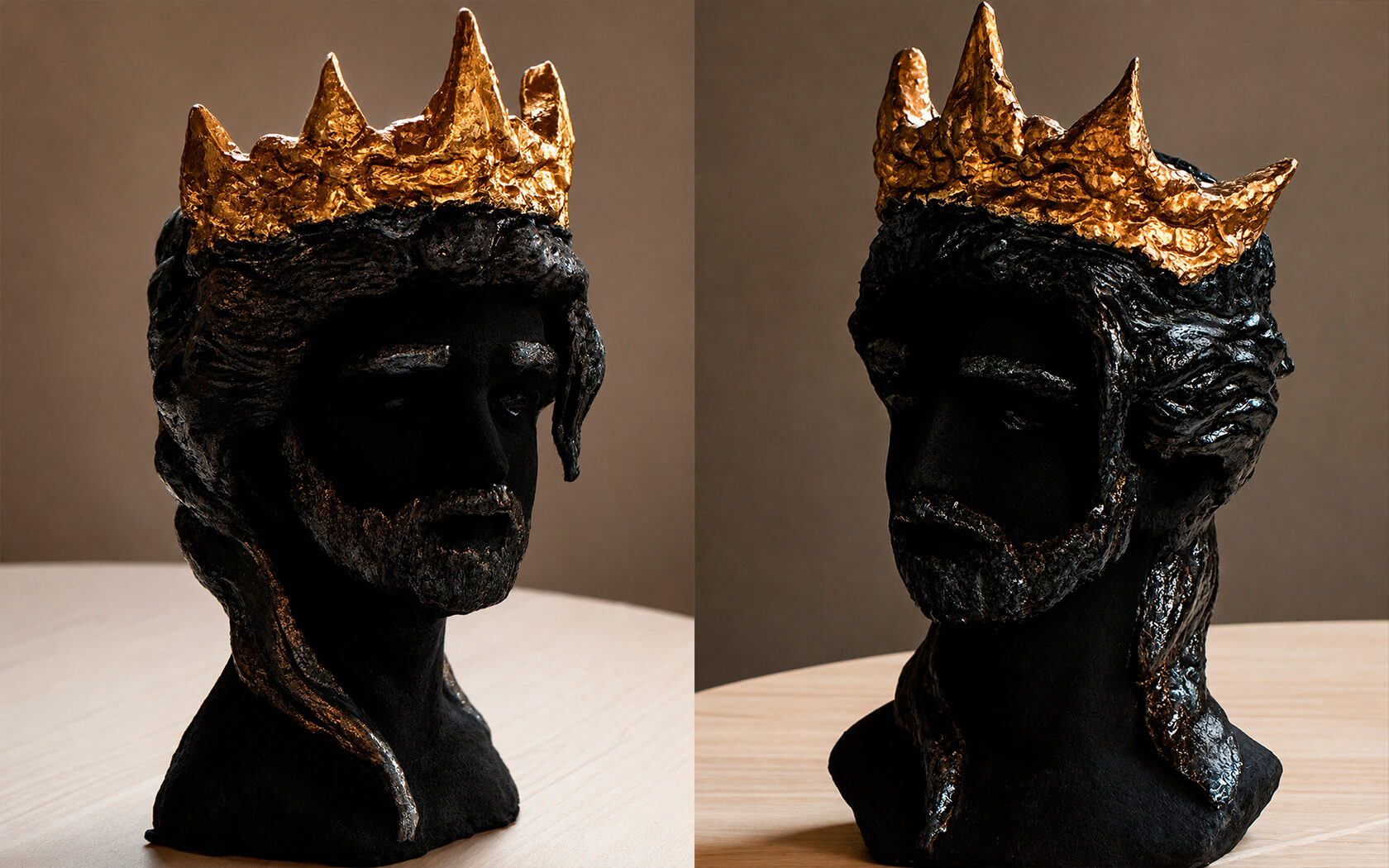
Another connection exists between the figure with the crown and the eye. The crowned figure represents the “King of My Heart,” which could be a father, partner, brother, son, or another deeply loved person. The eye represents guardianship, observation, and protection. For me personally, my father, whom I lost to cancer in 2012, is the King of My Heart. I even tried to give the eye the same hazel color as his eyes.
These connections make the works personal to me, while still allowing viewers to interpret them through their own experiences.
Yes, exactly. I want to tell stories from different perspectives, bringing together culture, tradition, history, and mythology within a single work and expressing them through images rather than words.
Since childhood, I have been told that I have a very active and somewhat complex imagination. Some of my works are connected to one another. For example, Diamond Night and The Garden represent two different sides of the same region. The blue moon and desert dunes at night refer to the poetic and romantic image of the desert, a landscape that has inspired poetry for centuries. The Garden, meanwhile, represents another aspect of the Arabian region and its deep historical and cultural associations with the idea of the garden.
There is also a connection between the elephant carrying hell and the window-frame work. Both deal with the difficulties we face in life and with situations in which danger may appear unavoidable, yet there is still a possibility of overcoming it.
Another connection exists between the figure with the crown and the eye. The crowned figure represents the “King of My Heart,” which could be a father, partner, brother, son, or another deeply loved person. The eye represents guardianship, observation, and protection. For me personally, my father, whom I lost to cancer in 2012, is the King of My Heart. I even tried to give the eye the same hazel color as his eyes.
These connections make the works personal to me, while still allowing viewers to interpret them through their own experiences.
The mask is one of the most striking recurring images in your work. What does it represent to you: hidden identity, protection, transformation, or something entirely different?
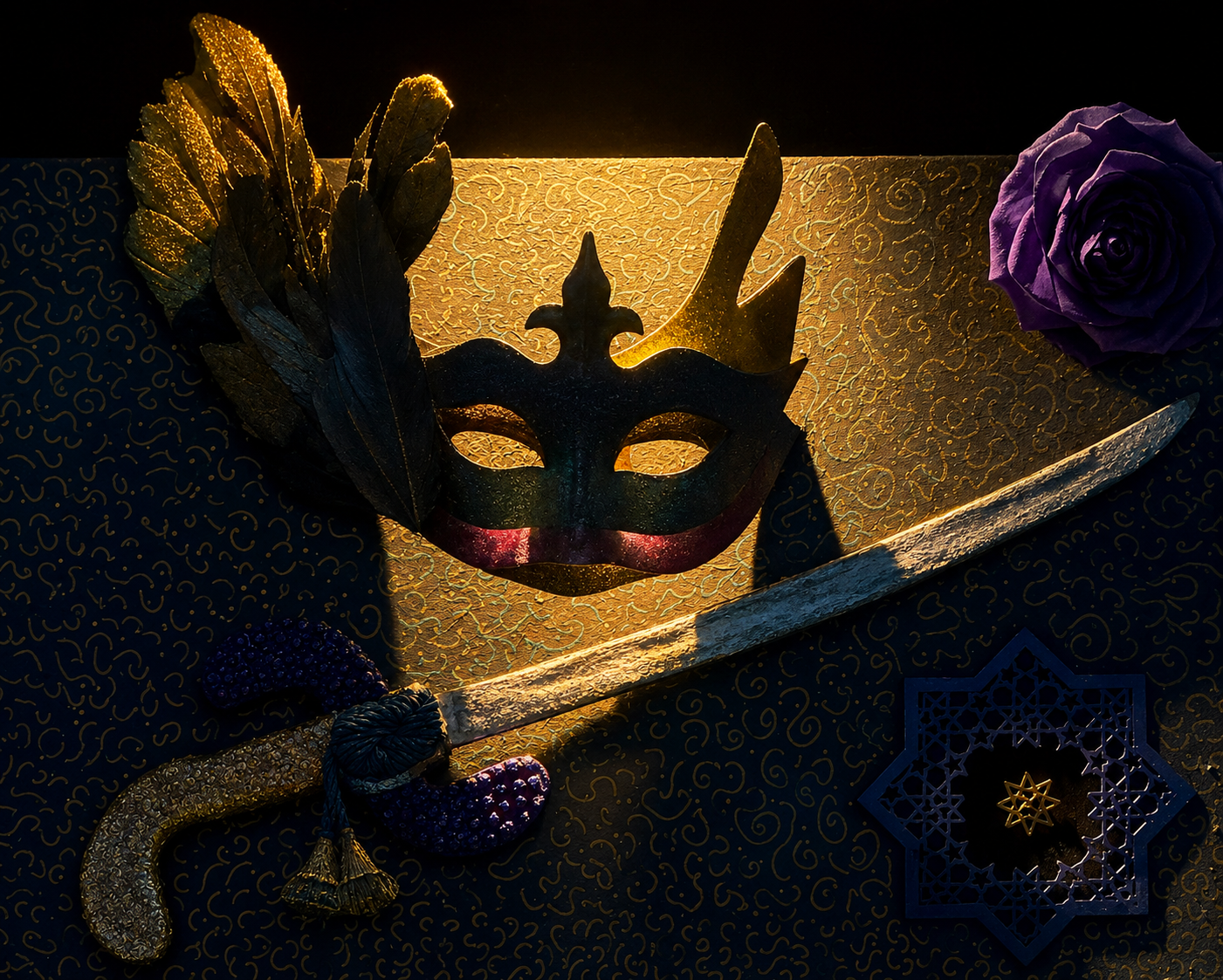
I chose the mask for several reasons. First, the word itself is believed to have linguistic connections to Arabic. More importantly, however, the mask can symbolize either good or evil depending on the intentions of the person wearing it. Someone may hide their identity in order to deceive, while another person may remain anonymous while doing something good without seeking recognition.
The mask also appears across many cultures, which gives it an almost universal symbolic quality. That makes it particularly useful for expressing the ideas I want to communicate.
At the same time, there is an aesthetic reason for using it. A mask placed on a canvas, especially when contrasted with deep colors, light, and shadow, can create a very powerful visual effect. I have posted photographs on Instagram showing how different lighting conditions transform these pieces and give them an almost mysterious quality.
So for me, the mask combines both artistic and symbolic possibilities.
I chose the mask for several reasons. First, the word itself is believed to have linguistic connections to Arabic. More importantly, however, the mask can symbolize either good or evil depending on the intentions of the person wearing it. Someone may hide their identity in order to deceive, while another person may remain anonymous while doing something good without seeking recognition.
The mask also appears across many cultures, which gives it an almost universal symbolic quality. That makes it particularly useful for expressing the ideas I want to communicate.
At the same time, there is an aesthetic reason for using it. A mask placed on a canvas, especially when contrasted with deep colors, light, and shadow, can create a very powerful visual effect. I have posted photographs on Instagram showing how different lighting conditions transform these pieces and give them an almost mysterious quality.
So for me, the mask combines both artistic and symbolic possibilities.
Images associated with power and restriction, such as crowns, handcuffs, and enclosed spaces, appear in your work. Do you use art to explore ideas of power, freedom, and liberation?
This is a very personal subject for me, but my answer is definitely yes. My own experiences made me want to explore something incredibly important in life: freedom and liberation. We often do not realize how essential freedom is until we lose it.
For me, this idea is not political. It is much broader and more personal. A person can literally lose their freedom, but we can also become prisoners of cultural expectations, shame, emotional control, or even our own minds and hearts. Some people become trapped by their emotions or by wounds they carry internally and do not know how to overcome.
Through my work, I try to transform my personal experience into something more universal. I want people of different ages, backgrounds, and circumstances to recognize something within it, whether through their own experiences or through someone they know who is struggling to find their own sense of personal freedom.
This is a very personal subject for me, but my answer is definitely yes. My own experiences made me want to explore something incredibly important in life: freedom and liberation. We often do not realize how essential freedom is until we lose it.
For me, this idea is not political. It is much broader and more personal. A person can literally lose their freedom, but we can also become prisoners of cultural expectations, shame, emotional control, or even our own minds and hearts. Some people become trapped by their emotions or by wounds they carry internally and do not know how to overcome.
Through my work, I try to transform my personal experience into something more universal. I want people of different ages, backgrounds, and circumstances to recognize something within it, whether through their own experiences or through someone they know who is struggling to find their own sense of personal freedom.
The moon also appears repeatedly in your work. What significance does it hold for you, and why do you find yourself returning to this image?
Because my collection is called The Dark Arabian Night, the moon naturally plays an important role in it.
For centuries, before modern navigation systems existed, travelers relied on the moon and stars to find their way. The moon provided light and guidance, but it also became associated with protection, romance, poetry, mythology, and imagination.
There is another meaning that is especially important to me. If you have experienced darkness, whether literally or metaphorically, you instinctively search for light. We often speak about “the light at the end of the tunnel,” but in my work I chose the moon instead. To me, it is a more emotional, poetic, and passionate symbol of hope.
The moon itself has fascinated humanity for centuries. Its scale, its visible surface, and its mystery have inspired countless myths and stories. In my work, however, I see it primarily as a positive symbol: something that illuminates darkness and helps us find a direction.
Because my collection is called The Dark Arabian Night, the moon naturally plays an important role in it.
For centuries, before modern navigation systems existed, travelers relied on the moon and stars to find their way. The moon provided light and guidance, but it also became associated with protection, romance, poetry, mythology, and imagination.
There is another meaning that is especially important to me. If you have experienced darkness, whether literally or metaphorically, you instinctively search for light. We often speak about “the light at the end of the tunnel,” but in my work I chose the moon instead. To me, it is a more emotional, poetic, and passionate symbol of hope.
The moon itself has fascinated humanity for centuries. Its scale, its visible surface, and its mystery have inspired countless myths and stories. In my work, however, I see it primarily as a positive symbol: something that illuminates darkness and helps us find a direction.
Your practice combines painting, sculpture, and three-dimensional objects. How do you choose the material and technique that best communicate a particular idea?
I was actually asked a similar question by a local newspaper here in Germany. My answer is simple, although perhaps a little unusual: I follow my imagination.
I do not follow one particular technique or academic method. Usually, an idea appears in my mind first. I imagine it, try to visualize it, and then begin looking for a way to physically create it.
Sometimes this leads me to unconventional solutions. For example, when I was creating the blue moon, I wanted to produce a soft halo around it without drawing a visible outline. I ended up experimenting with baby powder. It may sound strange, but somehow it worked for me.
This kind of experimentation is an important part of my process. I am less interested in following a predetermined technique than in finding whatever method allows me to achieve the image I have imagined.
I was actually asked a similar question by a local newspaper here in Germany. My answer is simple, although perhaps a little unusual: I follow my imagination.
I do not follow one particular technique or academic method. Usually, an idea appears in my mind first. I imagine it, try to visualize it, and then begin looking for a way to physically create it.
Sometimes this leads me to unconventional solutions. For example, when I was creating the blue moon, I wanted to produce a soft halo around it without drawing a visible outline. I ended up experimenting with baby powder. It may sound strange, but somehow it worked for me.
This kind of experimentation is an important part of my process. I am less interested in following a predetermined technique than in finding whatever method allows me to achieve the image I have imagined.
How does a new work usually begin for you: with an idea or story, a visual image, a material, or an emotional state? How much can the original concept change during the creative process?
Everything begins with a general idea. I start with the basic structure, whether I am working on a painting or a sculpture, and then I repeatedly step back and look at the work, imagining what it could become.
Many different possibilities develop in my mind during this process. Eventually, I choose one direction and continue working from there. In most cases, the final concept becomes completely clear only somewhere in the middle of the creative process. Once I reach that point, I usually stay with it.
There has been at least one major exception. With the window-frame piece, I struggled with the concept for quite some time. Just two days before the exhibition, I decided to change a large part of it. Sometimes the work itself seems to tell me that the original idea is not the right one.
Everything begins with a general idea. I start with the basic structure, whether I am working on a painting or a sculpture, and then I repeatedly step back and look at the work, imagining what it could become.
Many different possibilities develop in my mind during this process. Eventually, I choose one direction and continue working from there. In most cases, the final concept becomes completely clear only somewhere in the middle of the creative process. Once I reach that point, I usually stay with it.
There has been at least one major exception. With the window-frame piece, I struggled with the concept for quite some time. Just two days before the exhibition, I decided to change a large part of it. Sometimes the work itself seems to tell me that the original idea is not the right one.
Your works can feel beautiful, mysterious, and slightly unsettling at the same time. How consciously do you work with this emotional contrast, and what kind of response do you hope to evoke in the viewer?
This was a risk I accepted from the beginning. I entered the art world only recently because I finally wanted to pursue something I had always dreamed about. Of course, time, experience, and all the places where we have lived shape the way we see the world.
I never wanted simply to create a conventional piece of art. In fact, I am not sure I could. As I mentioned earlier, my way of thinking is quite complex, and what interests me most is creating emotional art.
There are millions of talented artists creating beautiful works that are visually satisfying. What I want to do is somewhat different. I want to give emotions a physical form. Emotions are rarely simple or clearly defined. They are often contradictory, layered, and difficult to explain, and I want my work to reflect that complexity.
My hope is that one day viewers will not simply look at my work but actually feel something through it, almost as though the artwork were speaking directly to them. The feeling does not always have to be happy. A work might contain passion, loss, pain, and hope simultaneously.
Even when some of my pieces may initially feel unsettling, I try to leave something positive within them: a possibility, an opening, or simply the feeling that there is still a chance.
This was a risk I accepted from the beginning. I entered the art world only recently because I finally wanted to pursue something I had always dreamed about. Of course, time, experience, and all the places where we have lived shape the way we see the world.
I never wanted simply to create a conventional piece of art. In fact, I am not sure I could. As I mentioned earlier, my way of thinking is quite complex, and what interests me most is creating emotional art.
There are millions of talented artists creating beautiful works that are visually satisfying. What I want to do is somewhat different. I want to give emotions a physical form. Emotions are rarely simple or clearly defined. They are often contradictory, layered, and difficult to explain, and I want my work to reflect that complexity.
My hope is that one day viewers will not simply look at my work but actually feel something through it, almost as though the artwork were speaking directly to them. The feeling does not always have to be happy. A work might contain passion, loss, pain, and hope simultaneously.
Even when some of my pieces may initially feel unsettling, I try to leave something positive within them: a possibility, an opening, or simply the feeling that there is still a chance.
How important is it for viewers to understand the meaning you originally intended? Do you prefer to communicate a specific message, or leave your work open to personal interpretation?
Communicating with viewers has had a positive effect on both the audience and on me as an artist. I noticed this very clearly during my exhibition.
During the first few days, I felt that many visitors did not immediately understand what I was trying to express. The works can be complex and layered, and some of the symbols and cultural references I use are not particularly familiar here in Germany.
Because of this, I began placing a short description beside each piece explaining its inspiration and some of the ideas behind it. I immediately noticed that people became more engaged with the work. What interested me most was that they did not simply accept my explanation; instead, they used it as a starting point for their own interpretations.
I even noticed visitors photographing both the artwork and the accompanying text. For me, that suggested that providing some context created a clearer and deeper connection between the viewer and the work, without taking away their freedom to interpret it personally.
Communicating with viewers has had a positive effect on both the audience and on me as an artist. I noticed this very clearly during my exhibition.
During the first few days, I felt that many visitors did not immediately understand what I was trying to express. The works can be complex and layered, and some of the symbols and cultural references I use are not particularly familiar here in Germany.
Because of this, I began placing a short description beside each piece explaining its inspiration and some of the ideas behind it. I immediately noticed that people became more engaged with the work. What interested me most was that they did not simply accept my explanation; instead, they used it as a starting point for their own interpretations.
I even noticed visitors photographing both the artwork and the accompanying text. For me, that suggested that providing some context created a clearer and deeper connection between the viewer and the work, without taking away their freedom to interpret it personally.
Is there one work that holds particular personal significance for you? Could you tell us about it and the story behind its creation?
There are two works that are particularly important to me.
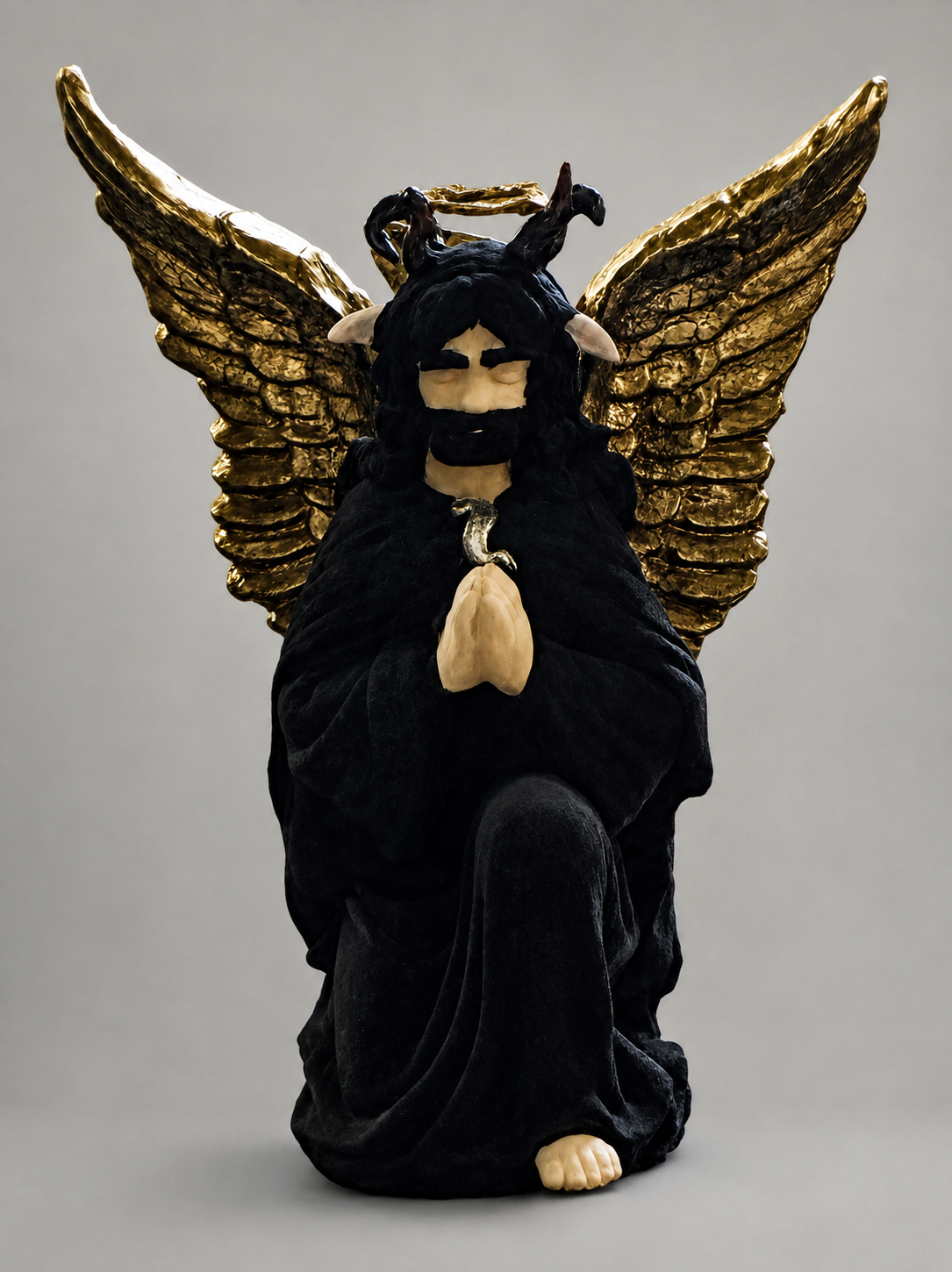
The first is The Human Soul, a sculpture that combines angelic and demonic elements within the same figure. It represents all of us. Good and bad are not necessarily separate parts of human nature; they can exist together, intertwined within the same person. This work is so personally meaningful to me that I do not want to sell it.
The second is Silent Agony. Creating it required a great deal of experimentation. I worked on melting and transforming the mask and placing mirrors inside the eye sockets in such a way that, when viewers look into them, they do not see themselves clearly but instead see the surroundings. The idea was inspired partly by the concept of the blind spot that we studied in physics at school.
For me, this represents the feeling of someone who has been emotionally wounded and says, “I don’t see myself.” The sculpture is intentionally difficult and perhaps even painful to look at. Beneath all of its wounds and darkness, however, there is a very simple message: “I am human too.”
Unfortunately, the combination of extremely dark black surfaces, mirrors, and fine details makes the sculpture very difficult to photograph accurately. In person, it has much more depth and emotional presence.
Unlike The Human Soul, Silent Agony is available for sale. I hope it eventually finds a place where its meaning can truly be understood, particularly by someone who recognizes the idea of invisible emotional wounds that others may never see.
There are two works that are particularly important to me.
The first is The Human Soul, a sculpture that combines angelic and demonic elements within the same figure. It represents all of us. Good and bad are not necessarily separate parts of human nature; they can exist together, intertwined within the same person. This work is so personally meaningful to me that I do not want to sell it.
The second is Silent Agony. Creating it required a great deal of experimentation. I worked on melting and transforming the mask and placing mirrors inside the eye sockets in such a way that, when viewers look into them, they do not see themselves clearly but instead see the surroundings. The idea was inspired partly by the concept of the blind spot that we studied in physics at school.
For me, this represents the feeling of someone who has been emotionally wounded and says, “I don’t see myself.” The sculpture is intentionally difficult and perhaps even painful to look at. Beneath all of its wounds and darkness, however, there is a very simple message: “I am human too.”
Unfortunately, the combination of extremely dark black surfaces, mirrors, and fine details makes the sculpture very difficult to photograph accurately. In person, it has much more depth and emotional presence.
Unlike The Human Soul, Silent Agony is available for sale. I hope it eventually finds a place where its meaning can truly be understood, particularly by someone who recognizes the idea of invisible emotional wounds that others may never see.
How do you see your artistic practice evolving? What new themes, materials, formats, exhibitions, or larger-scale projects would you like to explore in the future?
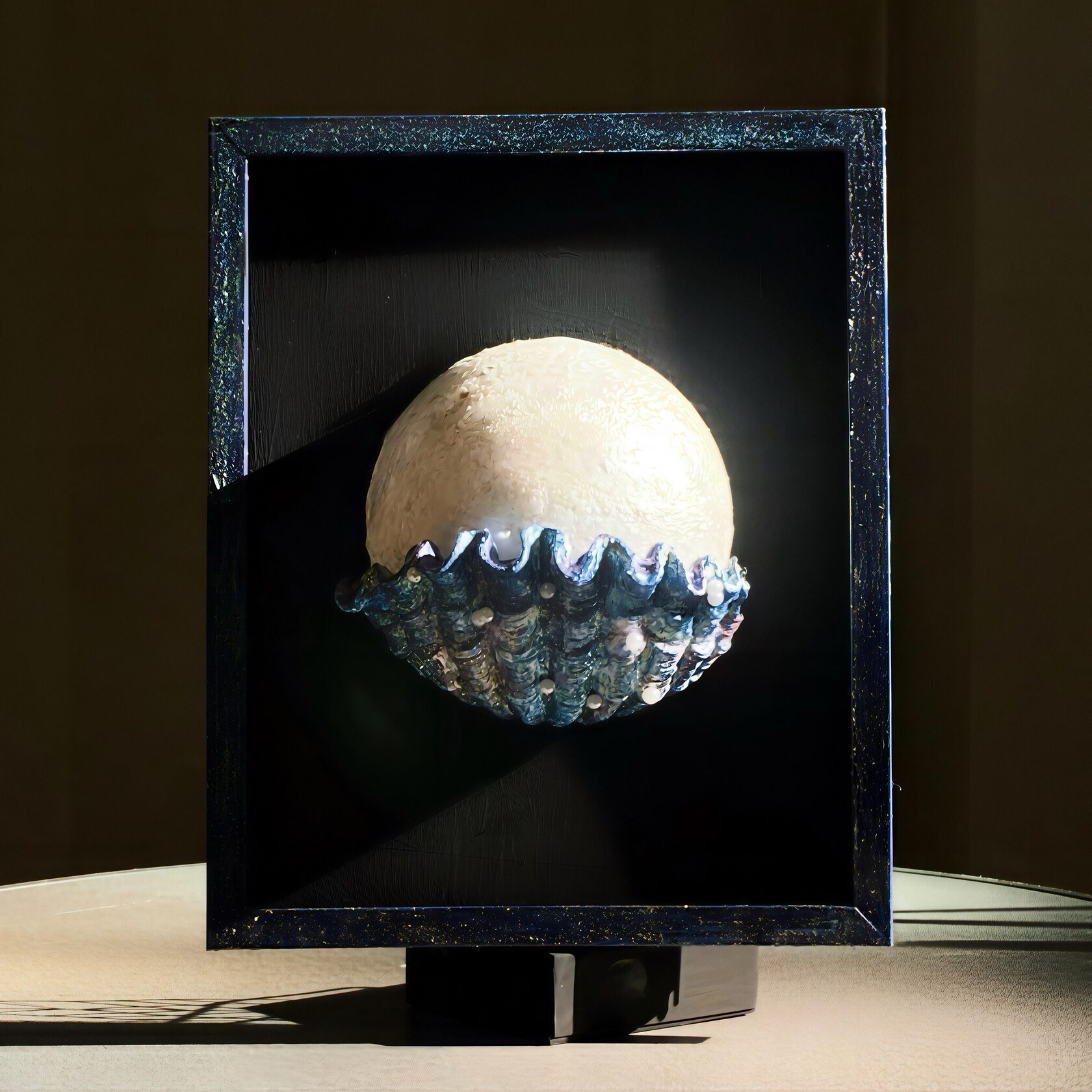
I have already started working on my next collection. The first piece is still in progress and is titled Rising from the Ocean. In it, I am using different shades of blue and white together with touches of gold.
With this new collection, I want to develop my artistic language while remaining true to what feels authentic to me. The works will continue to have deep emotional and symbolic meanings, but I also want to explore a broader range of colors and visual possibilities. I hope this will allow me to connect with viewers who may have different artistic tastes while showing that my creativity is not limited to the visual language of my first collection.
At the same time, I want every new work to retain something recognizably mine, a certain personal touch or emotional character.
I am also planning a particularly bold work on a large canvas, approximately 120 × 70 cm. In many ways, I have already stepped outside my comfort zone simply by deciding to pursue my dream of becoming an artist and by putting my face and name on social media, which was not an easy decision for me.
Now I want to go further. I want the new works to become larger, deeper, more emotional, and perhaps even a little more daring, while always retaining a positive purpose behind what I create.
Thank you very much for giving me the opportunity to share my story. I am truly honored to be interviewed, and who knows, perhaps one day my work will also be featured in one of your exhibitions.
I have already started working on my next collection. The first piece is still in progress and is titled Rising from the Ocean. In it, I am using different shades of blue and white together with touches of gold.
With this new collection, I want to develop my artistic language while remaining true to what feels authentic to me. The works will continue to have deep emotional and symbolic meanings, but I also want to explore a broader range of colors and visual possibilities. I hope this will allow me to connect with viewers who may have different artistic tastes while showing that my creativity is not limited to the visual language of my first collection.
At the same time, I want every new work to retain something recognizably mine, a certain personal touch or emotional character.
I am also planning a particularly bold work on a large canvas, approximately 120 × 70 cm. In many ways, I have already stepped outside my comfort zone simply by deciding to pursue my dream of becoming an artist and by putting my face and name on social media, which was not an easy decision for me.
Now I want to go further. I want the new works to become larger, deeper, more emotional, and perhaps even a little more daring, while always retaining a positive purpose behind what I create.
Thank you very much for giving me the opportunity to share my story. I am truly honored to be interviewed, and who knows, perhaps one day my work will also be featured in one of your exhibitions.
Interested in discovering more from this talented artist?
Explore the portfolio, follow new projects, and connect through the link below.
Website: https://www.art.salon/artists/louie-beidas
Instagram: @louie.beidas
E-mail : Louie.art@proton.me
Explore the portfolio, follow new projects, and connect through the link below.
Website: https://www.art.salon/artists/louie-beidas
Instagram: @louie.beidas
E-mail : Louie.art@proton.me
Miami, Fl