
INTERVIEW
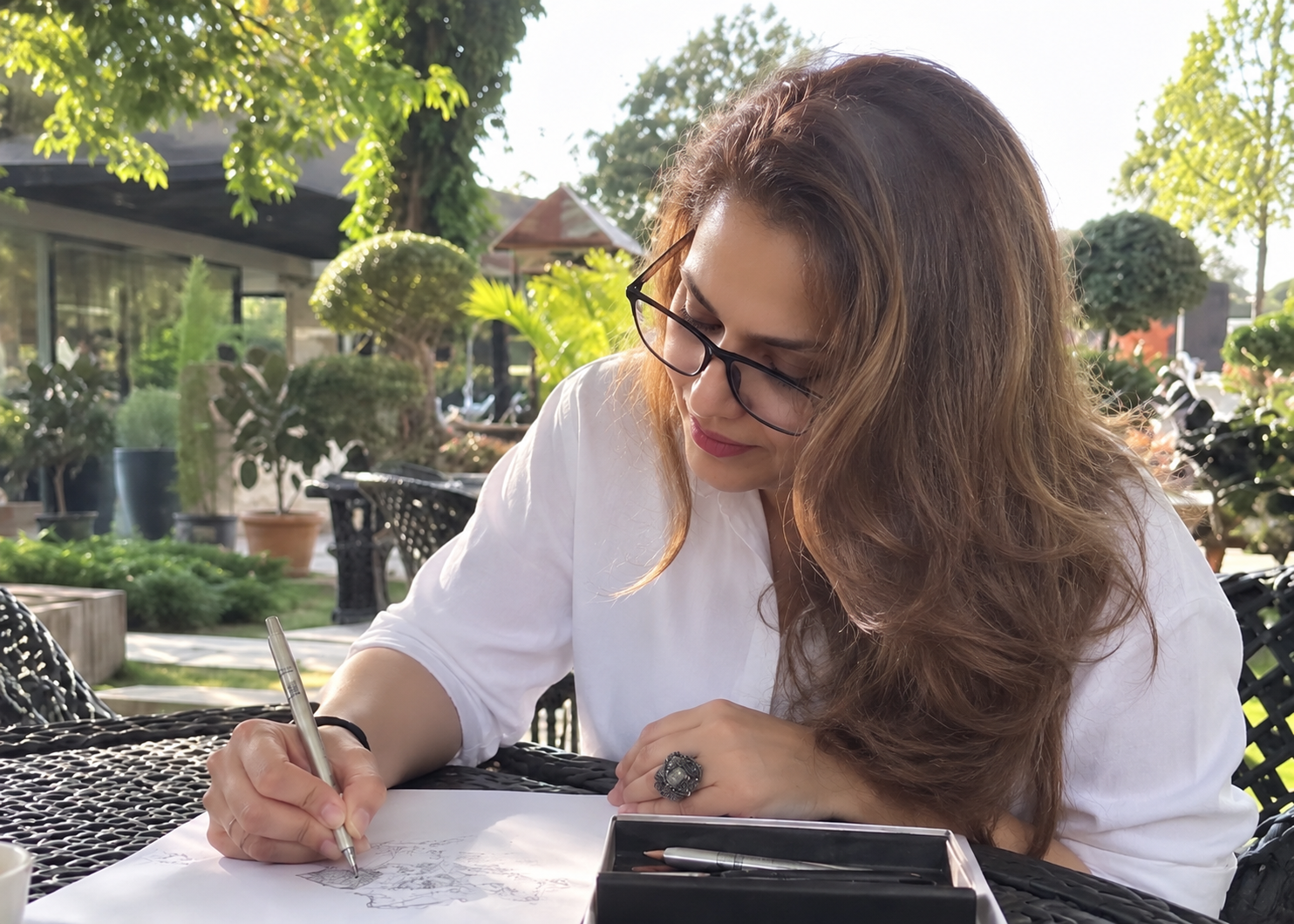
Atiya Faizi, Contemporary Visual Artist
🌍︎ Pakistan
Atiya Faizi is a contemporary visual artist from Pakistan whose intricate pen-and-ink drawings explore the intersections of nature, spirituality, memory, and inner transformation. Shaped by her background in graphic design and a lifelong exposure to different cultures, her visual language combines detailed linework, symbolic imagery, movement, and contemplative negative space. In this interview, Atiya discusses her creative journey, the influence of nature and spirituality on her practice, the meditative quality of working with ink, and her search for simplicity, acceptance, and stillness through art.
Could you introduce yourself and tell us how your journey as an artist began?
I am Atiya Faizi, a contemporary visual artist from Pakistan. Art has been a thread running quietly through my life for as long as I can remember.
My father was an airline pilot, so I grew up travelling from a very young age and was exposed to different countries, cultures and ways of life. That early exposure made me curious and open to the world. It taught me to observe, appreciate differences and find connections between seemingly different things.
My journey has taken me through graphic design, advertising, film, interior and furniture design, teaching and healing, before becoming increasingly focused on drawing and painting. I don’t feel that I became an artist at one particular moment. I feel I have always been one, and that everything I have experienced has gradually found its way into my work.
What is your educational background, and how has your education influenced your artistic practice?
My formal artistic education began in 1990 during my O and A Levels, followed by the National College of Arts in Lahore, where I studied from 1992–1996.
My first year at NCA exposed me to graphic design, ceramics, textiles, architectural drafting, printmaking, sculpture and painting. That experience taught me to explore freely and not be confined to one medium.
That openness continues to influence my practice today.
Your works have a very distinctive graphic language. How did you develop your style and your preference for detailed black-and-white drawing?
My visual language is strongly influenced by my training as a graphic designer. I feel I naturally blend both sides of myself—the designer and the artist—when I work.
I have always been drawn to line, composition, balance and detail, and over time these became an important part of my artistic language. Black and white also feels very natural to me. It represents purity, simplicity, honesty and clarity.
For me, there is something very honest about a single black line on white paper. There is nowhere to hide.
Nature is a recurring presence in your work, from trees, birds, and nests to landscapes and organic forms. What does nature represent for you personally and artistically?
Nature represents existence without pretence.
A tree grows, seasons change, birds build nests and an egg waits quietly to become something else. There is a natural acceptance in all of this that I find deeply moving.
Nature allows me to explore transformation, patience, resilience, waiting and renewal without having to depict these experiences literally.
Many of your drawings combine recognizable natural elements with imaginary or symbolic imagery. Where do these ideas usually begin?
Usually with a feeling, an observation or a memory rather than a finished idea.
Growing up travelling exposed me to different cultures and visual worlds from a very young age. I think that stayed with me and shaped the way I look at things. I am naturally curious about what connects us, even when our surroundings and experiences are very different.
Something I see in nature may trigger a thought or emotion, and the image begins to evolve from there. I enjoy that space between what is familiar and what is imagined.
Trees appear particularly often in your work and take on very different forms. What significance does the tree have in your visual language?
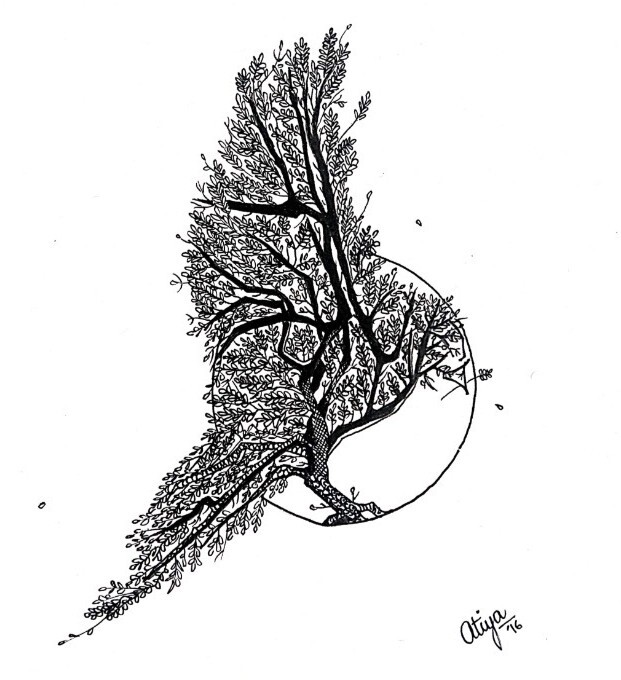
The tree is a powerful symbol of life for me. It is rooted yet constantly reaching, carrying its history while continuing to grow. It experiences cycles, loss and renewal without resisting them. I see something very human in that—the ability to remain rooted while continuing to become.
The tree is a powerful symbol of life for me. It is rooted yet constantly reaching, carrying its history while continuing to grow. It experiences cycles, loss and renewal without resisting them. I see something very human in that—the ability to remain rooted while continuing to become.
Your drawings contain an extraordinary amount of intricate detail and pattern. Is this complexity carefully planned, or does the composition develop intuitively as you work?
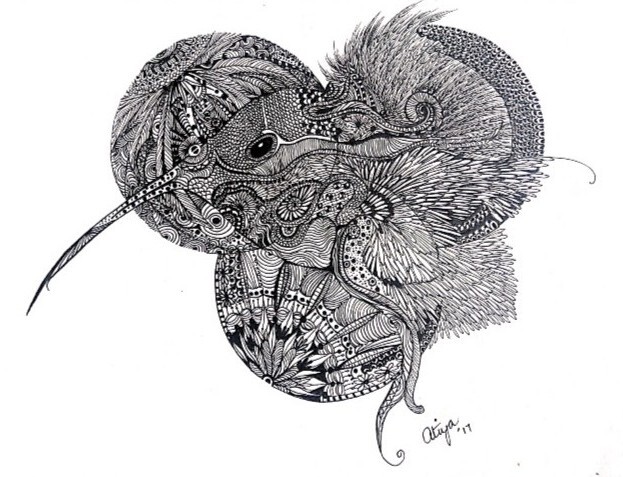
It is a combination of both. I usually begin with an idea or an emotional starting point, but I allow the drawing to evolve. One line leads to another, and sometimes the work takes me somewhere I hadn’t anticipated.
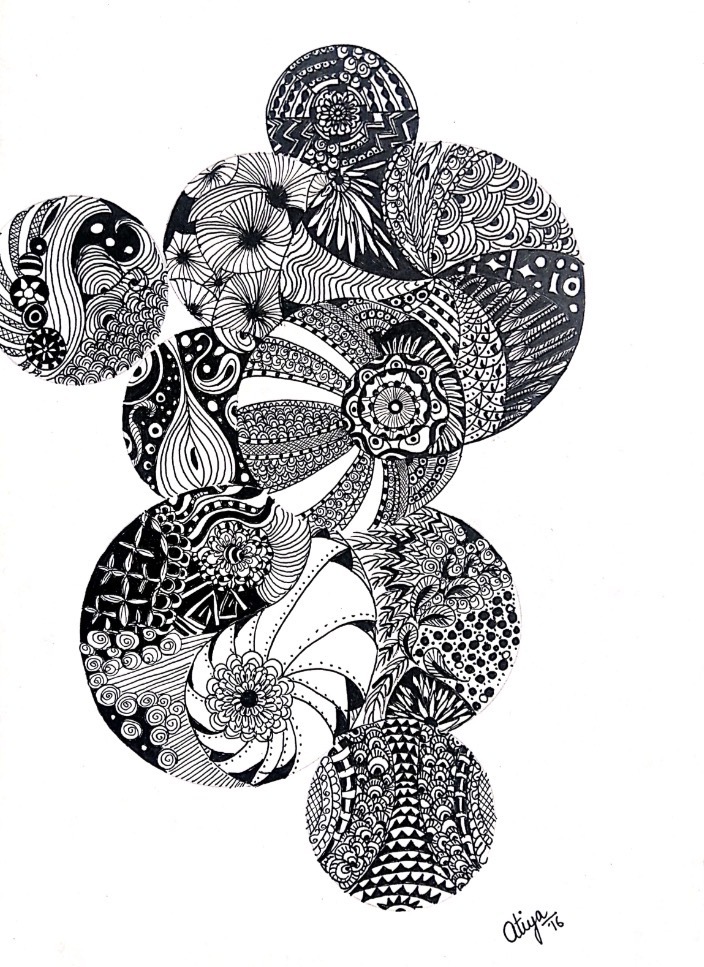
The repetition becomes meditative. The detail is not only about what the viewer sees; it is also about the time, attention and reflection invested in making it.
What materials and techniques do you primarily use, and what attracts you to working with line, ink, and monochrome imagery?
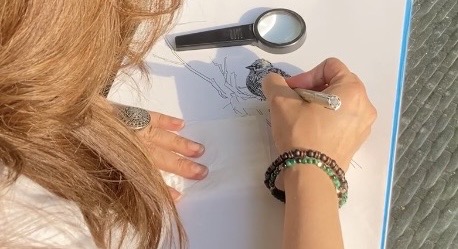
I primarily work with pen and ink on paper. I love the honesty of ink. Every line is a decision, and once it is there, it becomes part of the drawing. Working in monochrome removes distraction. It allows me to focus on line, rhythm, light, shadow and the feeling within the image.
I primarily work with pen and ink on paper. I love the honesty of ink. Every line is a decision, and once it is there, it becomes part of the drawing. Working in monochrome removes distraction. It allows me to focus on line, rhythm, light, shadow and the feeling within the image.
Some of your compositions seem to combine influences from nature, mythology, ornament, and different cultural traditions. What are your main sources of inspiration?
My influences come from many places—nature, spirituality, cultural memory, architecture, ornament and the visual richness I grew up surrounded by in Pakistan.
My background in design and film has also shaped the way I think about composition and storytelling. But perhaps my deepest source of inspiration is observation: watching people, nature and the quiet things that often go unnoticed.
Human figures, especially dancers and figures in motion, also appear in your work. What interests you about translating movement into drawing?
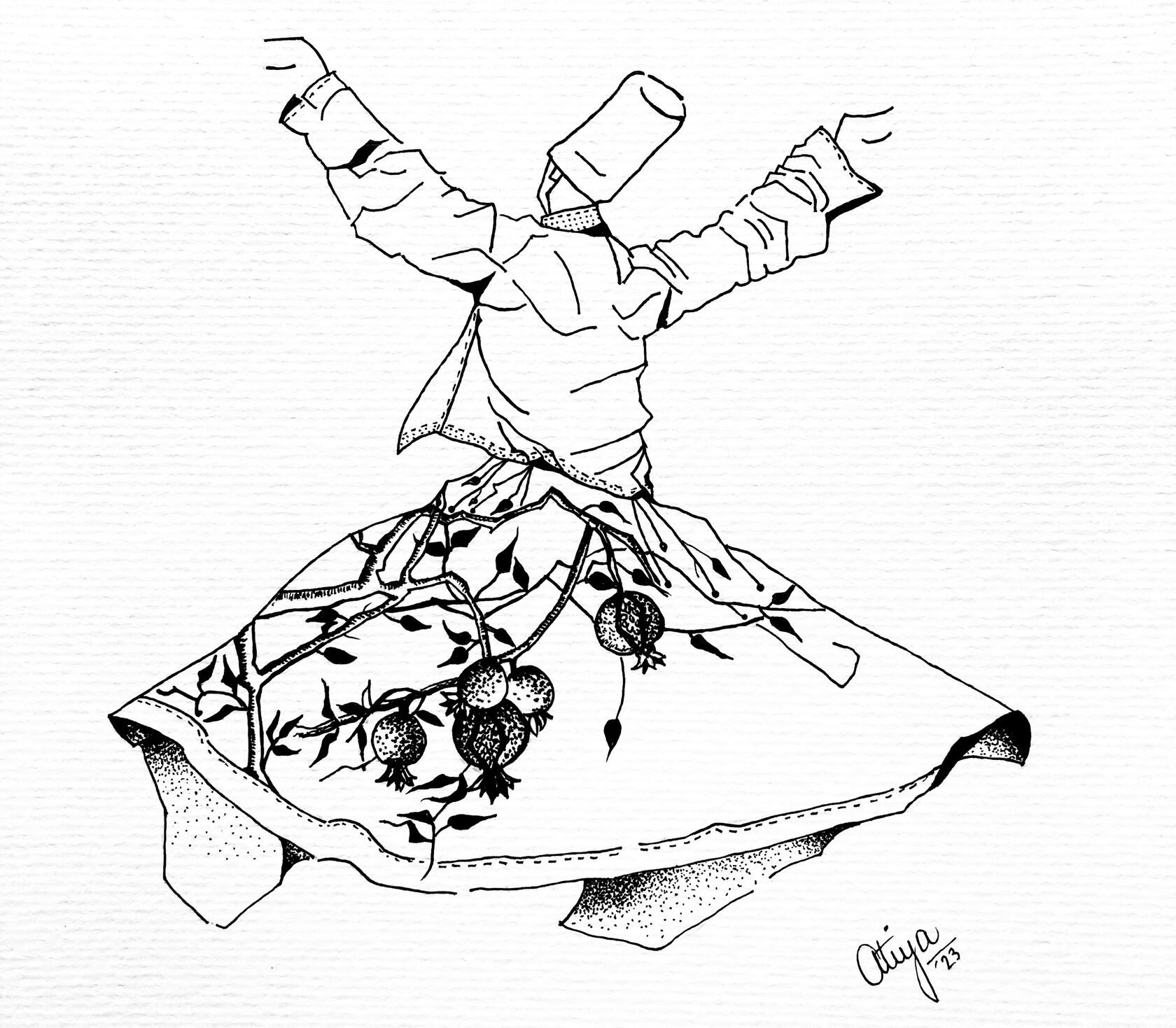
My Dervish figures are deeply connected to my spiritual journey. The series explores the struggle between the soul and the ego—the inner conflict between who we think we are and what lies deeper within us.
The movement of the Dervish becomes a metaphor for that journey. Through self-reflection, faith, acceptance and surrender, the struggle gradually gives way to peace. That is the essence of Lightness of Being.
How do you approach the balance between empty space and highly detailed areas in your compositions?
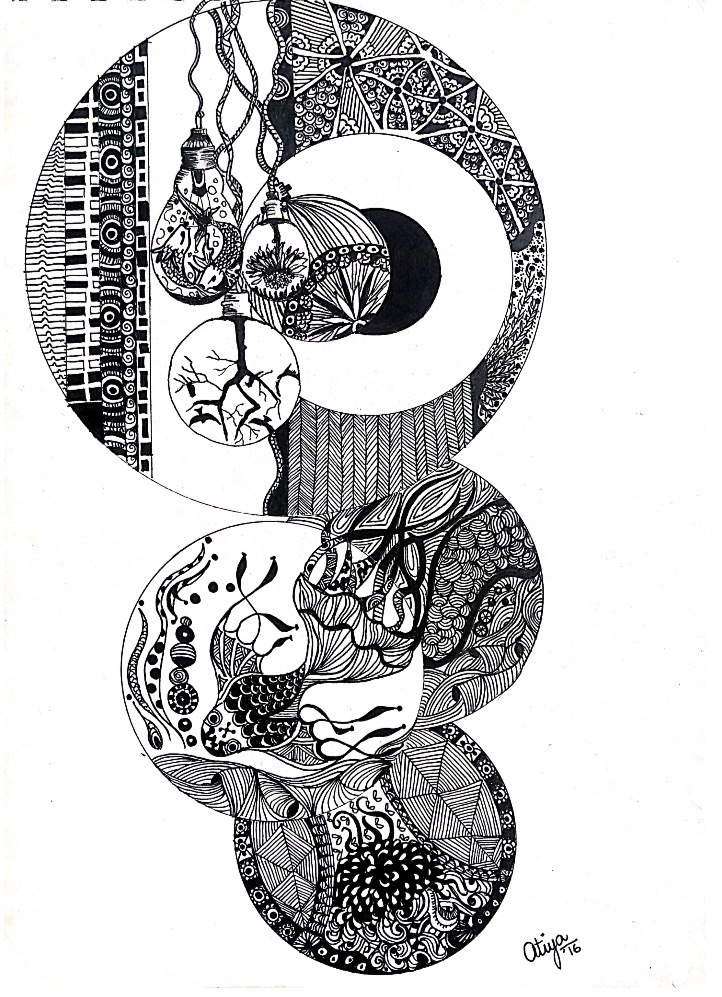
I think of empty space as silence. Just as music needs pauses, a drawing needs space to breathe. The contrast between detail and emptiness creates rhythm and allows the viewer to move through the work. For me, stillness is as important as movement.
I think of empty space as silence. Just as music needs pauses, a drawing needs space to breathe. The contrast between detail and emptiness creates rhythm and allows the viewer to move through the work. For me, stillness is as important as movement.
Is there a particular work or series that you consider especially important in the development of your artistic style? What is the story behind it?
Lightness of Being is particularly important in the development of my artistic style because it was where my interest in line, movement, detail and spirituality came together more clearly.
Working on the Dervish figures allowed me to explore movement through intricate line work while also expressing something deeply personal—the struggle between the soul and the ego, and the journey towards acceptance and peace.
This series helped me understand that my drawings could be both visually detailed and emotionally quiet. It gave me a stronger sense of the visual language I wanted to develop, and that continues to influence my work today.
Where has your work been exhibited or published, and which exhibitions, awards, collaborations, or other professional achievements have been most meaningful to you?
My creative career has moved across graphic design, advertising, film and visual communication, alongside my artistic practice.
My work is currently with Plogix Gallery, and I have recently joined the Saatchi Art community, where selected works will be exhibited online. My work is also being exhibited in Times Square alongside 39 other artists.
I have also had work selected for international exhibitions in Lisbon and Athens, including R■H – The Soul and Lightness of Being.
For me, these opportunities are meaningful because they allow my work to travel, reach new audiences and become part of conversations beyond where it began.
What do you hope viewers feel or discover when they spend time looking closely at your drawings?
I hope they slow down. My work comes from a belief in simplicity, honesty, acceptance, forgiveness and healing. I don’t want to tell the viewer what to feel; I want to create enough space for them to discover something within themselves. If a drawing gives someone a moment of stillness or makes them reflect a little more deeply, that is meaningful to me.
I hope they slow down. My work comes from a belief in simplicity, honesty, acceptance, forgiveness and healing. I don’t want to tell the viewer what to feel; I want to create enough space for them to discover something within themselves. If a drawing gives someone a moment of stillness or makes them reflect a little more deeply, that is meaningful to me.
What are you currently working on, and in what direction would you like to develop your artistic practice in the future?
I am currently in the early stages of developing my new series. I am sketching, experimenting and allowing the ideas to evolve naturally rather than rushing towards a finished body of work.
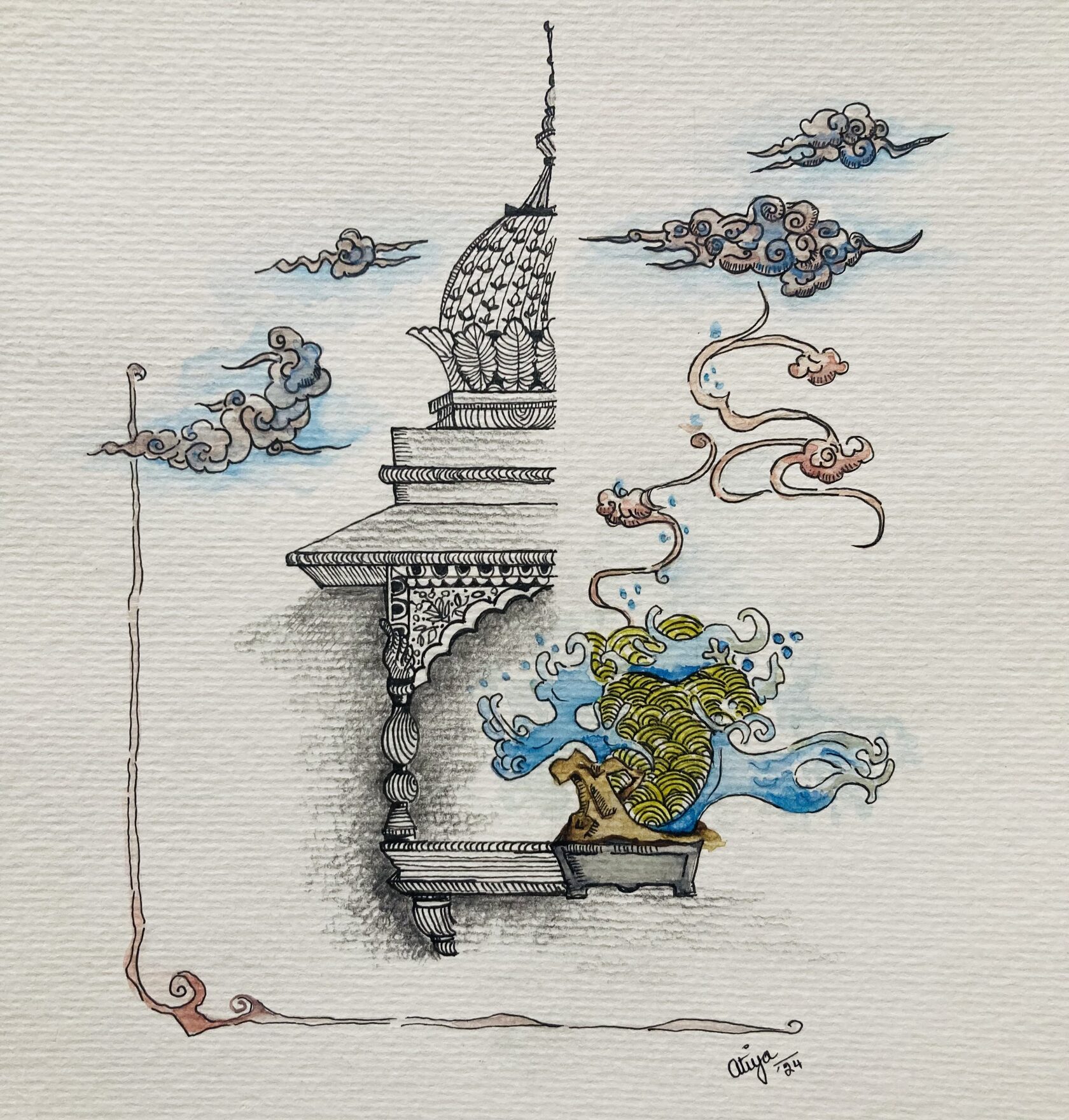
Meanwhile, I am sharing an ongoing postcard project that brings together my artwork and my graphic-design skills. It has been a playful way of exploring how my art can exist in a more accessible graphic form.
As for the future, I want to keep experimenting and allow my practice to evolve without being confined by one particular style or medium.
Interested in discovering more from this talented artist?
Explore the portfolio, follow new projects, and connect through the link below.
Instagram: @attsfaizi
Email: atiyashakeel1@gmail.com
Explore the portfolio, follow new projects, and connect through the link below.
Instagram: @attsfaizi
Email: atiyashakeel1@gmail.com
Miami, Fl