INTERVIEW
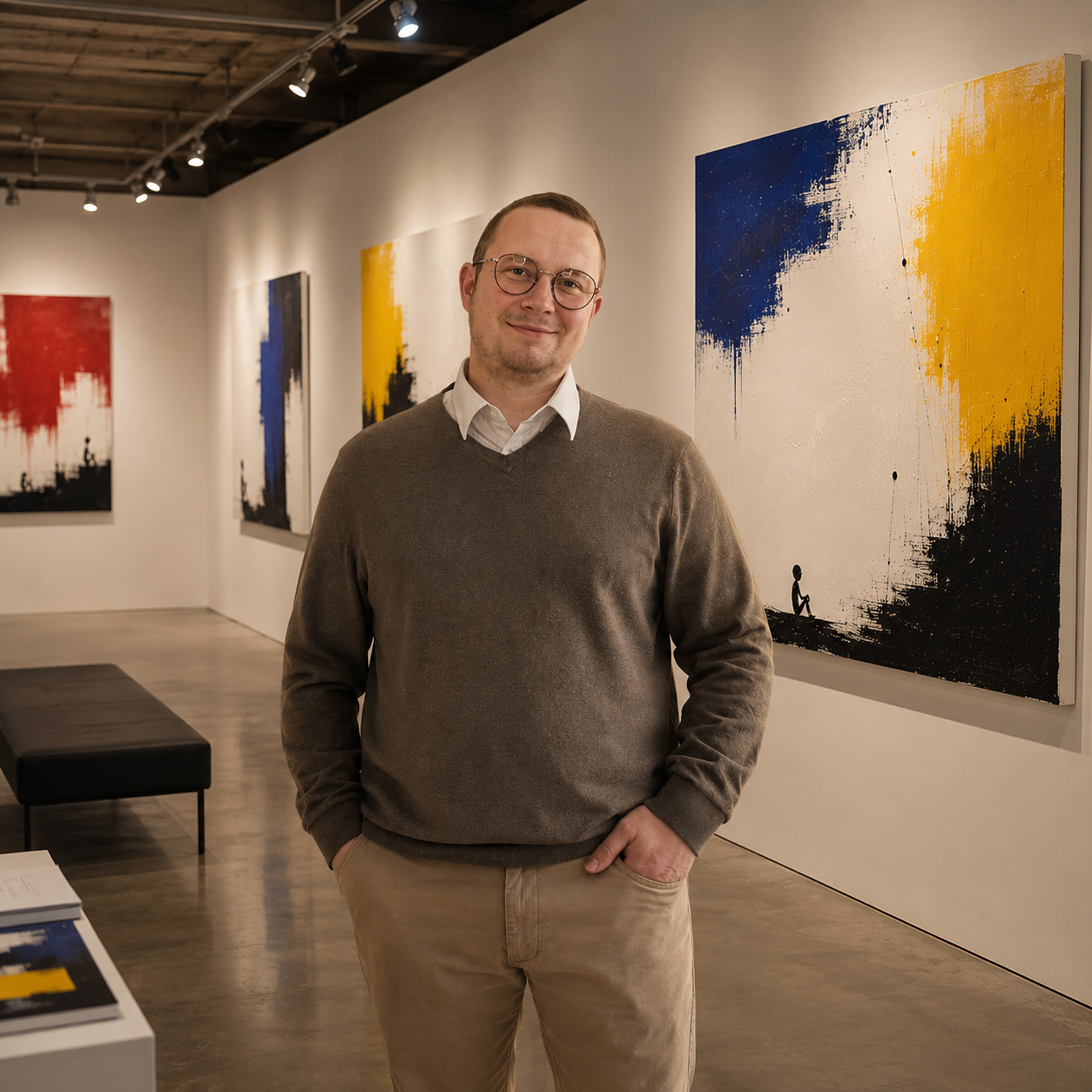
Antony Hentschel, Artist
🌍︎ Halle, Germany
Antony Hentschel is a self-taught German artist whose abstract practice explores the constant tension between order and chaos. In this interview, he reflects on his journey from creating art privately to presenting it publicly, the development of his distinctive visual language, and his use of bold colors, geometric forms, expressive lines, layered surfaces, and newspaper fragments. He also discusses the role of intuition, accidents, and physical movement in his process, and why disrupting an established structure is often the starting point for creating something new.
Could you introduce yourself and tell us a little about your background?
My name is Antony Hentschel. I am 33 years old and live in Halle (Saale), in central Germany.
I grew up in a small village in the Harz Mountains, surrounded by nature and a much quieter environment than the city I live in today. I think this background has influenced me more than I realized for a long time. Growing up in a small place teaches you to observe your surroundings and to find meaning in simple things.
I have been involved with art for around 15 years, although for most of that time I kept my work largely private. Only a few months ago did I find the courage to take the step of presenting my art publicly.
That step has changed the way I look at my own work. I am no longer only painting for myself. I am beginning to understand what my paintings can communicate to other people and how they can exist beyond my own studio.
My name is Antony Hentschel. I am 33 years old and live in Halle (Saale), in central Germany.
I grew up in a small village in the Harz Mountains, surrounded by nature and a much quieter environment than the city I live in today. I think this background has influenced me more than I realized for a long time. Growing up in a small place teaches you to observe your surroundings and to find meaning in simple things.
I have been involved with art for around 15 years, although for most of that time I kept my work largely private. Only a few months ago did I find the courage to take the step of presenting my art publicly.
That step has changed the way I look at my own work. I am no longer only painting for myself. I am beginning to understand what my paintings can communicate to other people and how they can exist beyond my own studio.
What is your educational and professional background? Did you receive formal artistic training?
I am self-taught. I did not attend an art academy or receive formal artistic training.
For me, that has become an important part of my artistic identity. Over the years, I have learned by experimenting, making mistakes, starting again, and questioning my own decisions.
Because I did not have a fixed academic framework telling me how something should be done, I developed my visual language through a very personal process. I am still learning, and I actually see that as something positive.
I don’t want my work to be limited by rules that I didn’t create myself.
I am self-taught. I did not attend an art academy or receive formal artistic training.
For me, that has become an important part of my artistic identity. Over the years, I have learned by experimenting, making mistakes, starting again, and questioning my own decisions.
Because I did not have a fixed academic framework telling me how something should be done, I developed my visual language through a very personal process. I am still learning, and I actually see that as something positive.
I don’t want my work to be limited by rules that I didn’t create myself.
When did abstraction become the most natural way for you to express yourself?
Abstraction gradually became the most natural form of expression for me because I became increasingly interested in what can be communicated without depicting something recognizable.
I don’t necessarily want the viewer to see a particular object or understand a specific story. I am more interested in creating a feeling, a tension, or a moment of uncertainty.
For me, abstraction creates freedom. The viewer doesn’t have to look at a painting and think, “This is supposed to be a tree, a person, or a landscape.” Instead, they can experience the work in their own way. That openness is very important to me.
Abstraction gradually became the most natural form of expression for me because I became increasingly interested in what can be communicated without depicting something recognizable.
I don’t necessarily want the viewer to see a particular object or understand a specific story. I am more interested in creating a feeling, a tension, or a moment of uncertainty.
For me, abstraction creates freedom. The viewer doesn’t have to look at a painting and think, “This is supposed to be a tree, a person, or a landscape.” Instead, they can experience the work in their own way. That openness is very important to me.
Your paintings have a strong sense of movement and physical energy. How important is the act of painting itself to you?
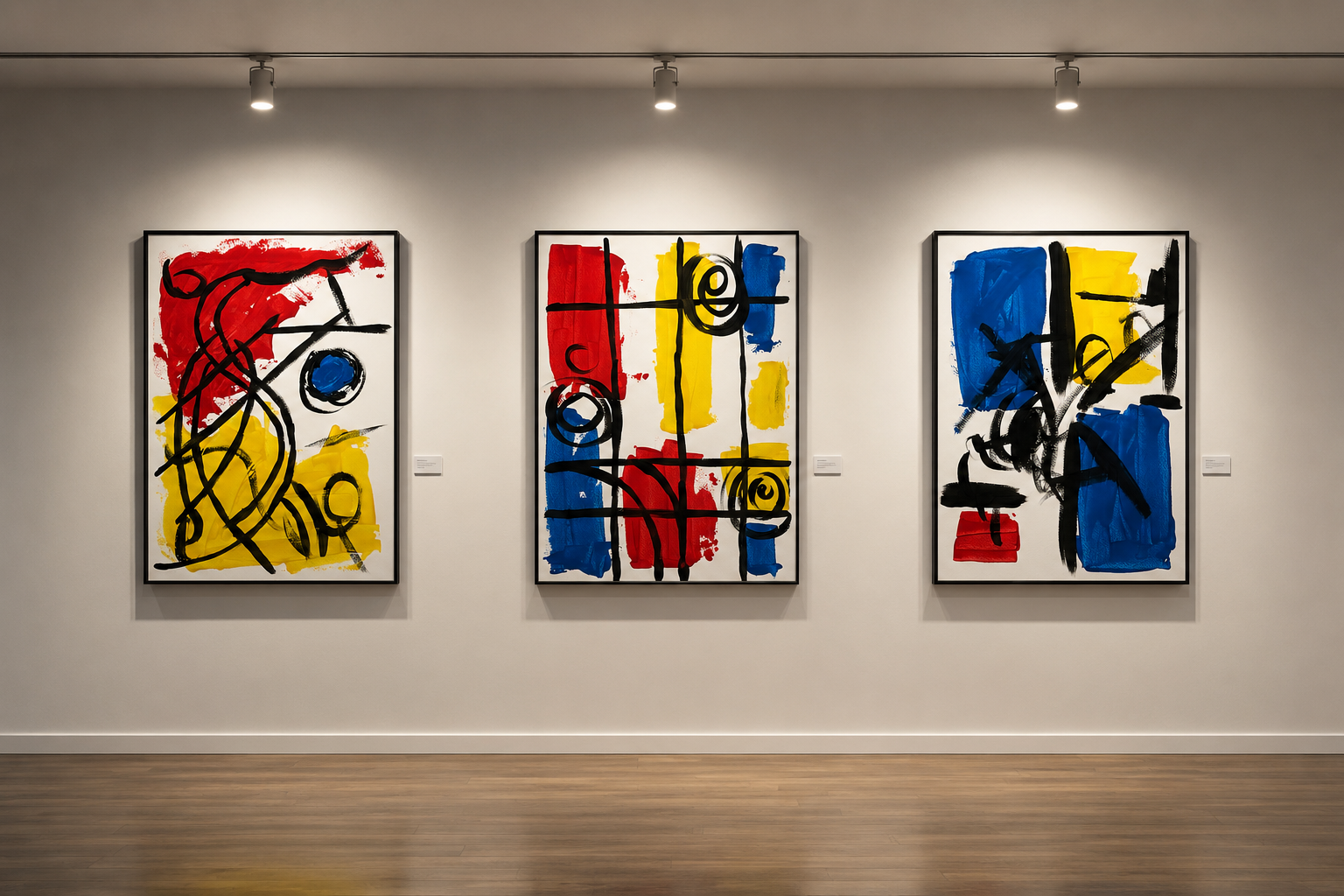
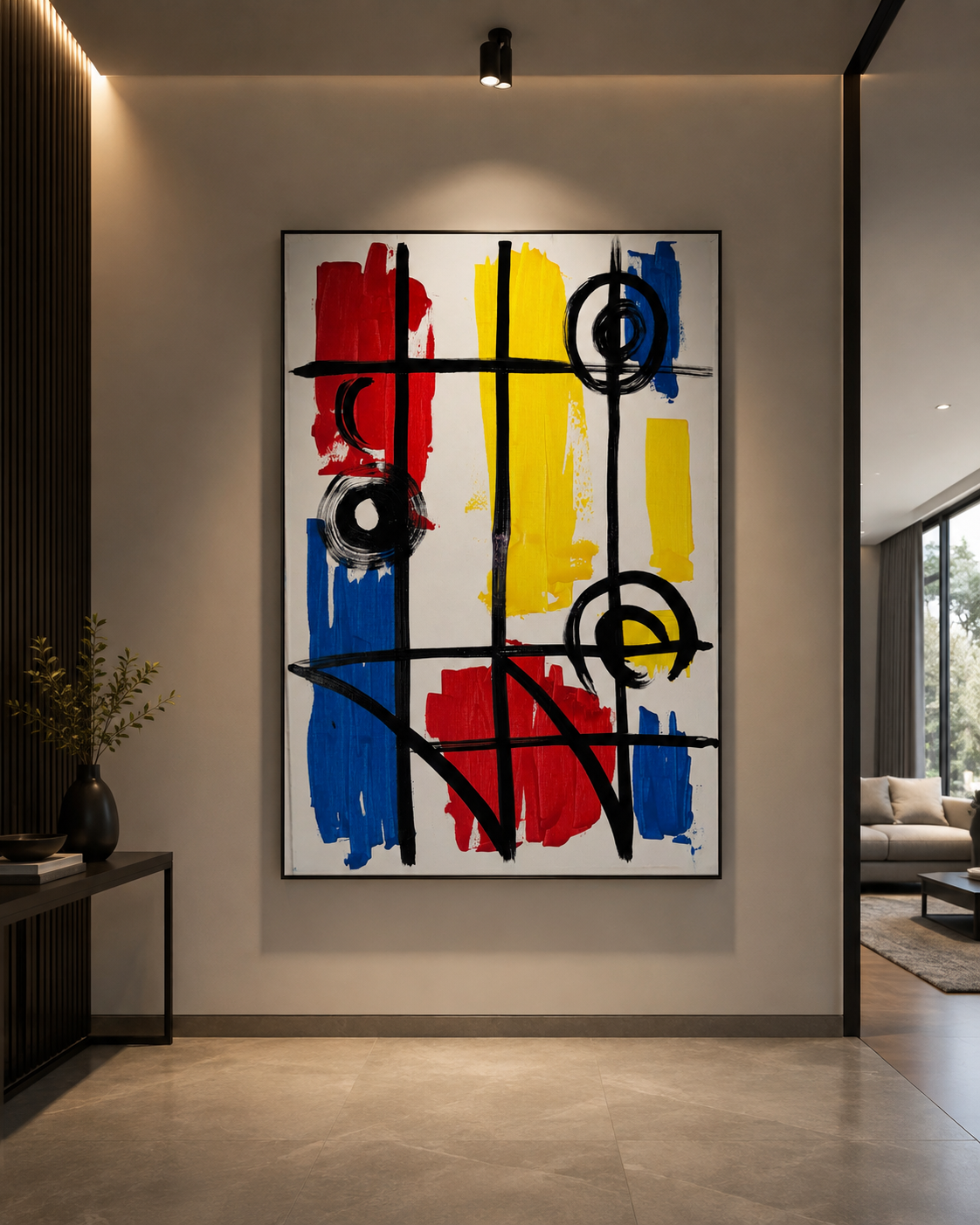
The act of painting is extremely important to me. My paintings are not simply constructed intellectually beforehand. The physical process becomes part of the artwork. My movements, the pressure I use, the direction of a line, and even the moment in which I decide to change something all leave traces behind.
I often begin with a certain idea of order. I use simple geometric elements and strong, clearly defined colors to create a structure. But while I am painting, that structure is deliberately disturbed.
Order becomes chaos. And then, within that chaos, I begin to create a new order. That process is at the heart of my work.
The act of painting is extremely important to me. My paintings are not simply constructed intellectually beforehand. The physical process becomes part of the artwork. My movements, the pressure I use, the direction of a line, and even the moment in which I decide to change something all leave traces behind.
I often begin with a certain idea of order. I use simple geometric elements and strong, clearly defined colors to create a structure. But while I am painting, that structure is deliberately disturbed.
Order becomes chaos. And then, within that chaos, I begin to create a new order. That process is at the heart of my work.
Your compositions appear spontaneous, yet carefully balanced. How much is intuitive and how much is consciously controlled?
It is a constant dialogue between intuition and control. I usually have an idea of where I want the painting to begin, but I don’t know exactly where it will end. I might place a shape or a line very deliberately and then make a decision that completely changes the balance of the composition.
Sometimes I destroy something that I thought was already successful because the painting needs something else. This is where the relationship between order and chaos becomes important again. I create rules for myself, and then I break them. The final composition is therefore neither completely planned nor completely accidental. It is the result of constantly reacting to what is already on the canvas.
It is a constant dialogue between intuition and control. I usually have an idea of where I want the painting to begin, but I don’t know exactly where it will end. I might place a shape or a line very deliberately and then make a decision that completely changes the balance of the composition.
Sometimes I destroy something that I thought was already successful because the painting needs something else. This is where the relationship between order and chaos becomes important again. I create rules for myself, and then I break them. The final composition is therefore neither completely planned nor completely accidental. It is the result of constantly reacting to what is already on the canvas.
Red, yellow, blue, black, and white appear repeatedly throughout your work. What attracts you to these contrasts?
I deliberately work with simple, strong colors. Red, yellow, blue, black, and white have a certain clarity. They don’t need much explanation. They are immediately recognizable and create strong contrasts when placed next to each other. I like that directness.
At the same time, the colors can behave very differently depending on their surroundings. A small red element can suddenly dominate an entire composition, while a black line can connect completely different areas of the painting. I don’t necessarily assign fixed symbolic meanings to the individual colors. Their meaning develops through their relationship with the other elements.
For me, the important thing is the tension they create together.
I deliberately work with simple, strong colors. Red, yellow, blue, black, and white have a certain clarity. They don’t need much explanation. They are immediately recognizable and create strong contrasts when placed next to each other. I like that directness.
At the same time, the colors can behave very differently depending on their surroundings. A small red element can suddenly dominate an entire composition, while a black line can connect completely different areas of the painting. I don’t necessarily assign fixed symbolic meanings to the individual colors. Their meaning develops through their relationship with the other elements.
For me, the important thing is the tension they create together.
Some of your works incorporate newspaper pages and printed material. What led you to introduce these elements?
Newspaper is interesting to me because it already contains information before I even begin painting. It represents something very real: events, opinions, politics, everyday life, and moments in time. When I place these pages into an abstract composition and begin painting over them, I change their original function. Something that was created to communicate specific information becomes part of something that does not necessarily communicate a specific message at all. I like that contradiction. The newspaper brings reality into the painting, while abstraction removes the need for a specific interpretation.
Newspaper is interesting to me because it already contains information before I even begin painting. It represents something very real: events, opinions, politics, everyday life, and moments in time. When I place these pages into an abstract composition and begin painting over them, I change their original function. Something that was created to communicate specific information becomes part of something that does not necessarily communicate a specific message at all. I like that contradiction. The newspaper brings reality into the painting, while abstraction removes the need for a specific interpretation.
When you paint over newspapers, are you responding to their original content?
Sometimes I am aware of what is written on the page, but I don’t necessarily want the viewer to read the painting as a political or journalistic statement. For me, the newspaper is more than its individual headlines. It represents the enormous amount of information that surrounds us every day. We constantly receive information, opinions, images, and events. Some of them remain with us, while others disappear almost immediately. By painting over the newspaper, I am transforming that information into something more emotional and universal. The original information becomes a layer rather than the final message.
Sometimes I am aware of what is written on the page, but I don’t necessarily want the viewer to read the painting as a political or journalistic statement. For me, the newspaper is more than its individual headlines. It represents the enormous amount of information that surrounds us every day. We constantly receive information, opinions, images, and events. Some of them remain with us, while others disappear almost immediately. By painting over the newspaper, I am transforming that information into something more emotional and universal. The original information becomes a layer rather than the final message.
Your surfaces contain layers, scratches, splashes, and traces of previous decisions. How important is layering?
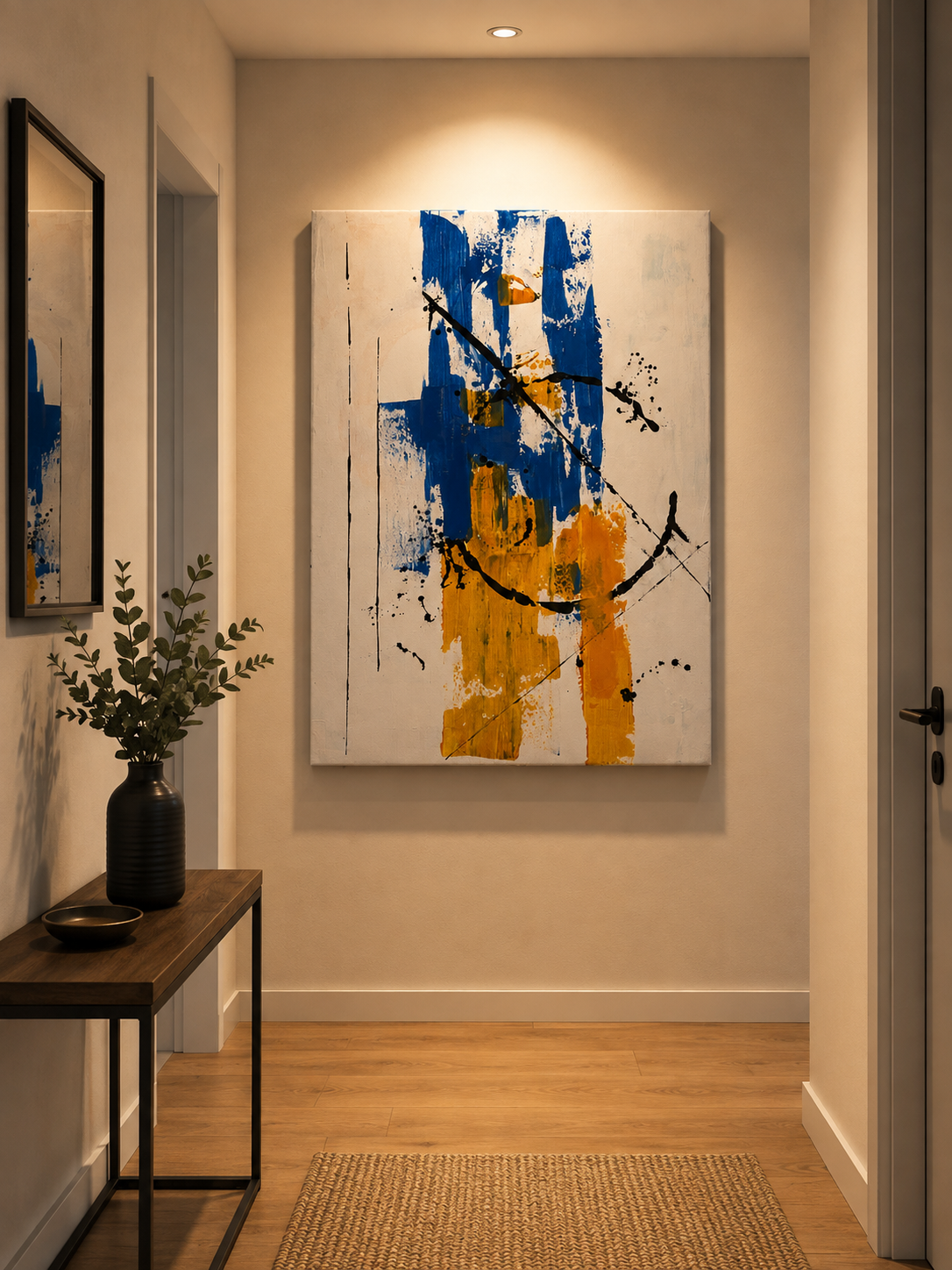
Layering is very important to me because it allows the painting to retain its own history. I don’t want every decision I make to disappear completely when I paint over it. Sometimes you can still see what was underneath. A line disappears but leaves a trace. A color is covered but still influences what comes afterward. A mistake becomes part of the final composition. In that sense, the painting becomes almost like a record of decisions. The viewer may not know exactly what happened during the process, but they can sense that there is something underneath the final surface. I like that.
Layering is very important to me because it allows the painting to retain its own history. I don’t want every decision I make to disappear completely when I paint over it. Sometimes you can still see what was underneath. A line disappears but leaves a trace. A color is covered but still influences what comes afterward. A mistake becomes part of the final composition. In that sense, the painting becomes almost like a record of decisions. The viewer may not know exactly what happened during the process, but they can sense that there is something underneath the final surface. I like that.
How do you know when an abstract painting is finished?
That is probably one of the most difficult parts of the process. A painting is finished when I feel that adding something would no longer improve it.
Sometimes I reach that point very suddenly. Everything seems to fall into place, and the painting simply feels complete. But there are also moments when I have to force myself to stop. Because my process is based on disturbing and rebuilding the composition, there is always the temptation to make one more change.
Sometimes the most important decision is realizing that the painting does not need anything else.
That is probably one of the most difficult parts of the process. A painting is finished when I feel that adding something would no longer improve it.
Sometimes I reach that point very suddenly. Everything seems to fall into place, and the painting simply feels complete. But there are also moments when I have to force myself to stop. Because my process is based on disturbing and rebuilding the composition, there is always the temptation to make one more change.
Sometimes the most important decision is realizing that the painting does not need anything else.
Have accidents ever played an important role in your work?
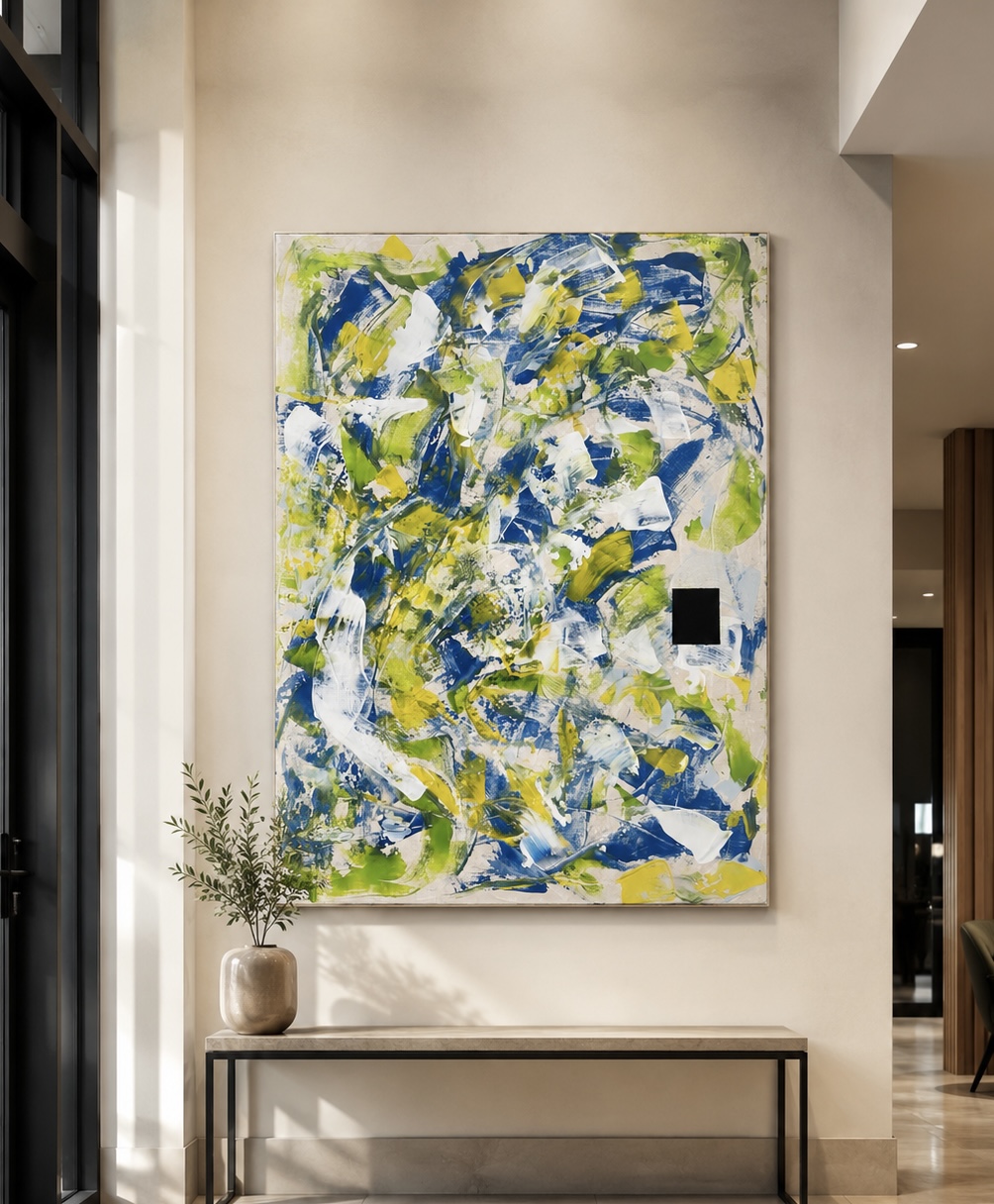
Absolutely. Some of the most interesting moments in my paintings have come from things I didn’t plan. A line may go somewhere different than expected. A color may behave differently on the surface. A mark may initially look like a mistake. But instead of automatically correcting it, I often ask myself: “What happens if I accept this?”
Sometimes the unexpected element becomes more interesting than the original idea. That is another reason why chaos is important in my work. I don’t want to control everything. If everything were completely predictable, the painting would lose something.
Absolutely. Some of the most interesting moments in my paintings have come from things I didn’t plan. A line may go somewhere different than expected. A color may behave differently on the surface. A mark may initially look like a mistake. But instead of automatically correcting it, I often ask myself: “What happens if I accept this?”
Sometimes the unexpected element becomes more interesting than the original idea. That is another reason why chaos is important in my work. I don’t want to control everything. If everything were completely predictable, the painting would lose something.
What do you hope happens when viewers stand in front of your work?
I don’t want to tell the viewer exactly what they are supposed to see. I would rather create a starting point for their own experience. Maybe someone immediately feels something. Maybe another person starts looking for recognizable shapes. Someone else might simply enjoy the colors and composition. All of those reactions are valid.
I think abstract art becomes particularly interesting when the viewer becomes part of the process of completing the work. The painting doesn’t have to have one single answer.
I don’t want to tell the viewer exactly what they are supposed to see. I would rather create a starting point for their own experience. Maybe someone immediately feels something. Maybe another person starts looking for recognizable shapes. Someone else might simply enjoy the colors and composition. All of those reactions are valid.
I think abstract art becomes particularly interesting when the viewer becomes part of the process of completing the work. The painting doesn’t have to have one single answer.
How important are scale and environment to you?
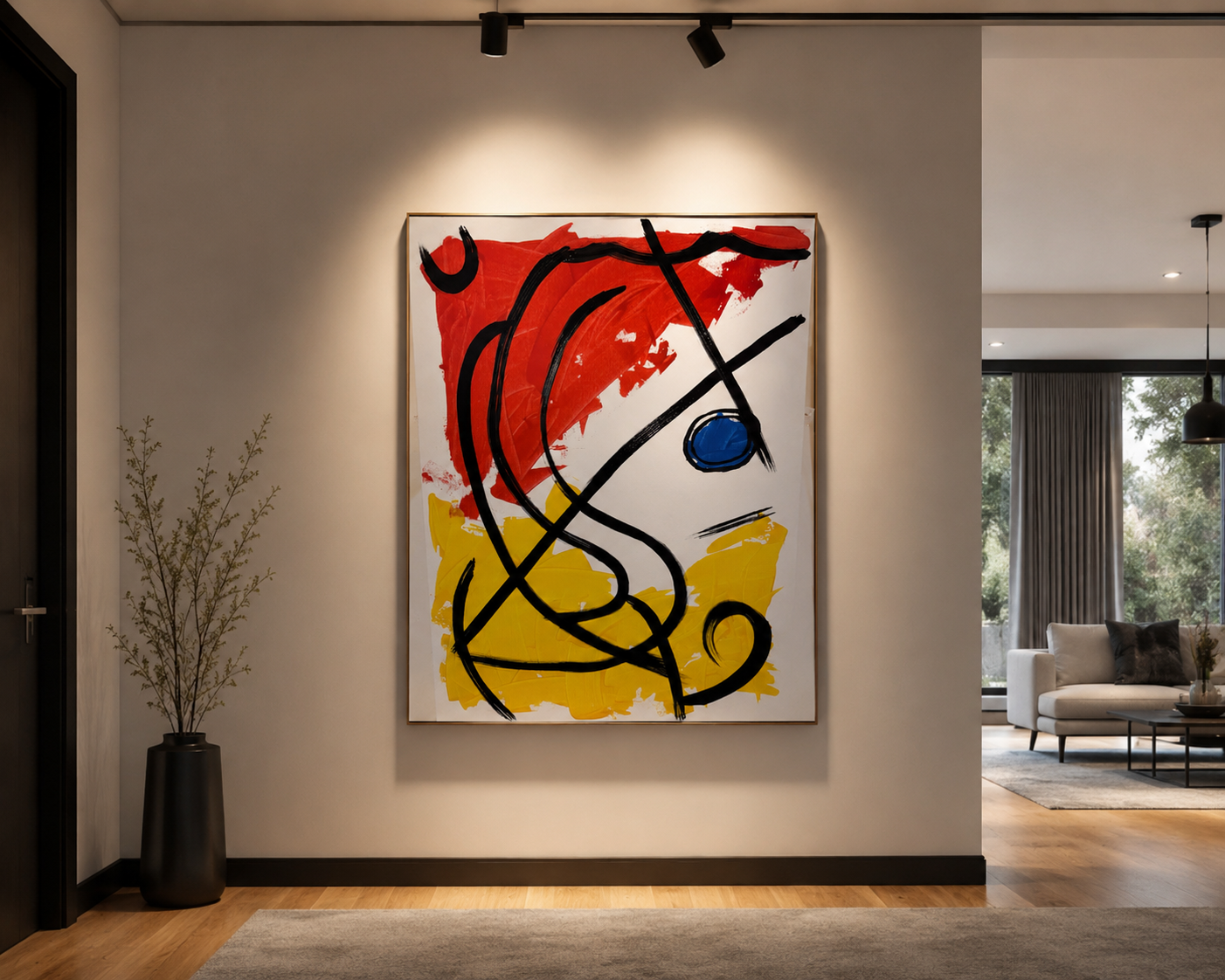
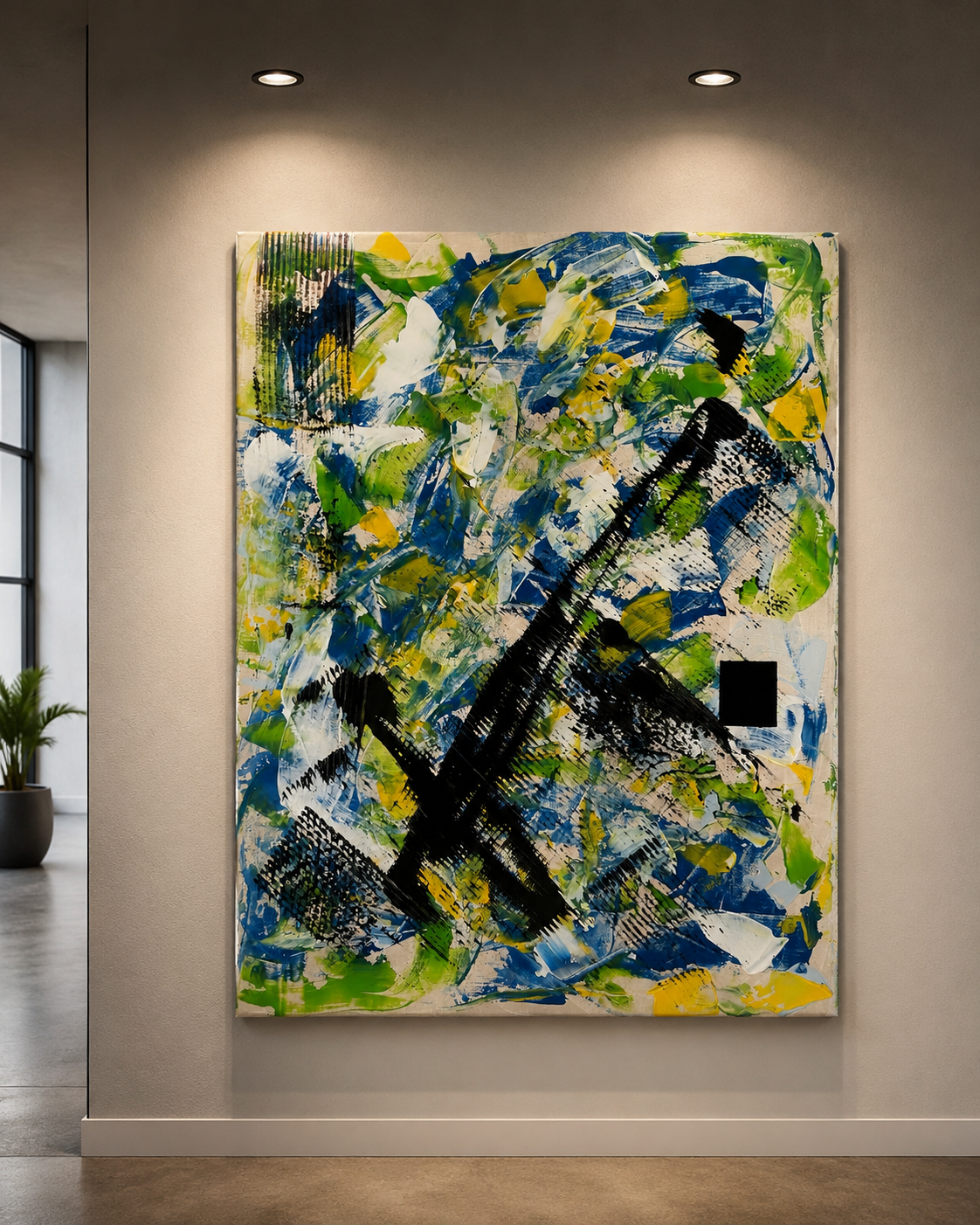
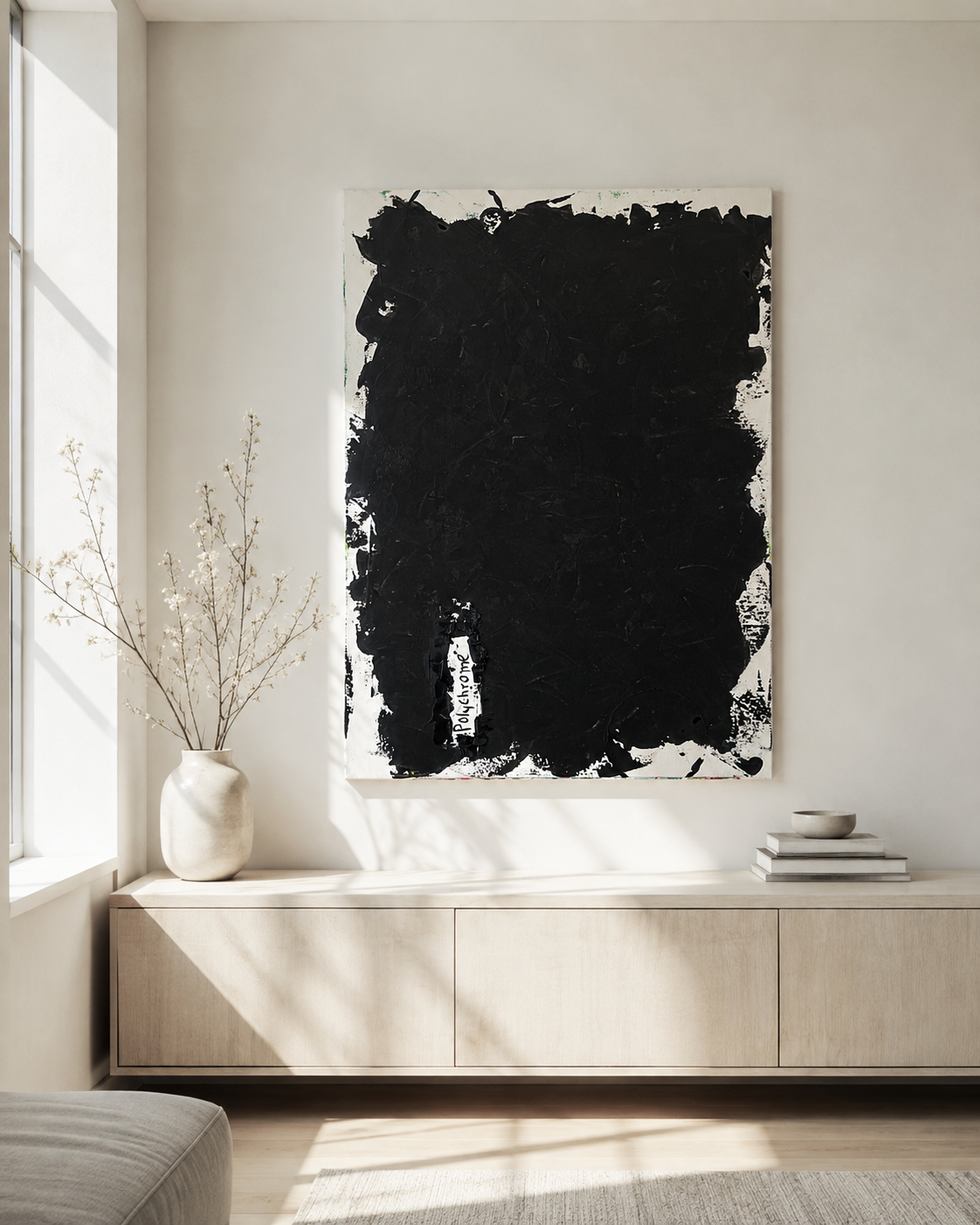
The environment is becoming increasingly important to me. I see my paintings not only as objects that exist on their own, but also as works that can interact with architecture and interior spaces. Scale changes the experience of a painting completely.
A small work can invite the viewer to come closer and examine the details. A large painting can become almost architectural itself and change the atmosphere of an entire room. I am interested in that relationship.
At the same time, I don’t want to design the painting entirely around a particular room. The work should still be able to stand independently.
The environment is becoming increasingly important to me. I see my paintings not only as objects that exist on their own, but also as works that can interact with architecture and interior spaces. Scale changes the experience of a painting completely.
A small work can invite the viewer to come closer and examine the details. A large painting can become almost architectural itself and change the atmosphere of an entire room. I am interested in that relationship.
At the same time, I don’t want to design the painting entirely around a particular room. The work should still be able to stand independently.
How has your artistic language evolved?
My artistic language is still developing, and I think that is one of the most exciting parts of where I am right now.
Over the years, I experimented with different approaches, but gradually I realized that I was most interested in the relationship between structure and disruption. That led me toward simple geometric forms, strong colors, and expressive lines.
I also began to understand that I don’t need to add more and more elements to make a painting interesting. Sometimes simplicity creates more tension.
I am still experimenting, but I feel that my work is beginning to develop a recognizable visual language that feels genuinely mine.
My artistic language is still developing, and I think that is one of the most exciting parts of where I am right now.
Over the years, I experimented with different approaches, but gradually I realized that I was most interested in the relationship between structure and disruption. That led me toward simple geometric forms, strong colors, and expressive lines.
I also began to understand that I don’t need to add more and more elements to make a painting interesting. Sometimes simplicity creates more tension.
I am still experimenting, but I feel that my work is beginning to develop a recognizable visual language that feels genuinely mine.
What are you searching for in your work now?
Right now, I am searching for the point where order and chaos can coexist without one completely overcoming the other. That is something I don’t think I will ever fully resolve, and perhaps I don’t want to. I want to explore larger formats and continue experimenting with different surfaces, materials, and techniques.
I am also interested in seeing how my paintings behave in larger spaces, galleries, and architectural environments.
Most importantly, I want to continue developing my own language without losing the freedom that made me start painting in the first place.
I have only recently begun showing my work publicly, so I feel that I am at the beginning of a new chapter. There is still a lot to discover.
Right now, I am searching for the point where order and chaos can coexist without one completely overcoming the other. That is something I don’t think I will ever fully resolve, and perhaps I don’t want to. I want to explore larger formats and continue experimenting with different surfaces, materials, and techniques.
I am also interested in seeing how my paintings behave in larger spaces, galleries, and architectural environments.
Most importantly, I want to continue developing my own language without losing the freedom that made me start painting in the first place.
I have only recently begun showing my work publicly, so I feel that I am at the beginning of a new chapter. There is still a lot to discover.
If you had to describe the central idea behind your work in a few words, what would it be?
Order and chaos. I deliberately begin with simple elements and create a certain order. Then I disturb that order through the painting process. Lines cross boundaries. Colors interrupt each other. Forms overlap. Decisions are covered, destroyed, and rebuilt. But eventually, a new order emerges. That cycle is what interests me.
For me, the painting is not about choosing between order and chaos. It is about showing that both can exist at the same time, and that one can create the other.
Order and chaos. I deliberately begin with simple elements and create a certain order. Then I disturb that order through the painting process. Lines cross boundaries. Colors interrupt each other. Forms overlap. Decisions are covered, destroyed, and rebuilt. But eventually, a new order emerges. That cycle is what interests me.
For me, the painting is not about choosing between order and chaos. It is about showing that both can exist at the same time, and that one can create the other.
Interested in discovering more from this talented artist?
Explore the portfolio, follow new projects, and connect through the link below.
Instagram: @tony_abstract
E-mail: h.antony@web.de
Explore the portfolio, follow new projects, and connect through the link below.
Instagram: @tony_abstract
E-mail: h.antony@web.de
Miami, Fl